
Key Takeaways
"Dr. Goodhew is an eye care professional who cared enough about contact lens waste to bring a recycling program into her practice for patients. She still couldn't sustain it herself. The system asked her to remember a freezer bag, fill it over weeks, and bring it to the office. That's not a recovery system. It's optimism with an expiry date."
"A daily wearer in Oakville thought she was already recycling. She wasn't. The foil went in the garbage because she assumed it wasn't recyclable. The blister packs went in the municipal bin because she assumed the facility would handle them. Both assumptions were wrong, and there was no obvious way to know that."
"Together, two users recovered 1,260 units over 18 months that would otherwise have gone to landfill. Neither needed to be convinced the problem was real. They needed a system that worked inside the life they already had."
A Little Context First
We talk a lot about the problem. The scale of contact lens waste, why existing recycling programs struggle to reach most people, why blister packs fall through recycling machinery, why recovery has to happen in the bathroom and not somewhere else. The logic is sound on paper.
But logic on paper and a real unit on a real bathroom counter are two different things. So after 18 months with the first cohort still going, we checked in and asked them to tell us what it was actually like to use. Not what they thought we wanted to hear. What it was really like.
Two of those responses stayed with us.
Dr. Goodhew, Abbey Eye Care
Dr. Goodhew is an eye care professional. She's been concerned about contact lens waste since she switched to daily lenses. She wasn't a passive observer of the problem. When Bausch and Lomb launched their Every Contact Counts program with TerraCycle in 2020, she adopted it immediately and brought it into her practice for patients.
She was, by any measure, already one of the more conscientious contact lens wearers around. Here's what she told us:
"From the time I switched to daily contact lenses, I have been concerned about the waste I produce when using them. In 2020, Bausch and Lomb came up with a recycling program for this waste with their Every Contact Counts program in partnership with TerraCycle. Not only did I start using it right away, I brought it into my office for all of my contact lens patients to use." Dr. Goodhew, Abbey Eye Care
That second sentence matters. She didn't just adopt the program herself. She advocated for it professionally. Then she told us what happened next.
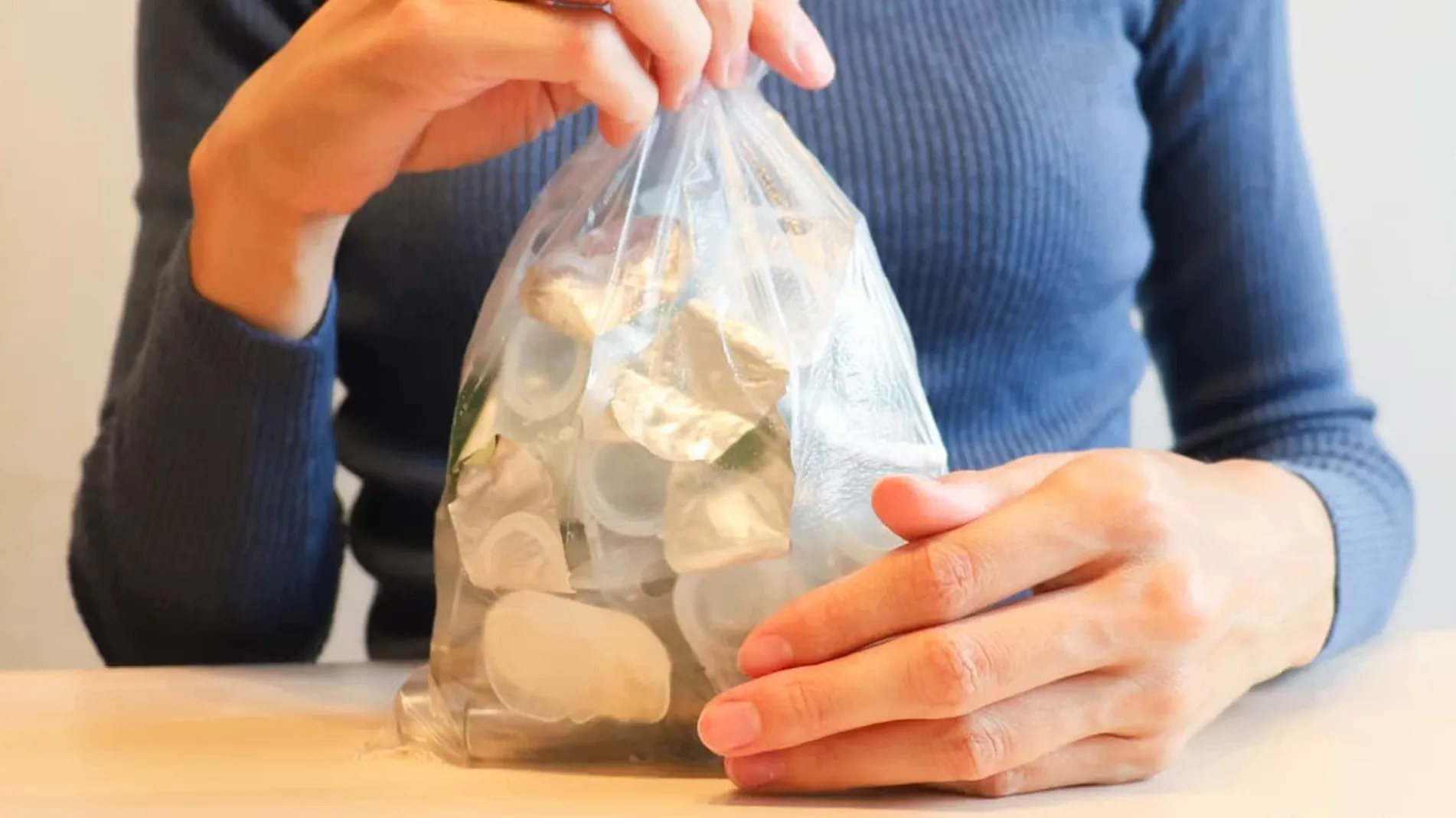
"Sadly, I have not been using it as faithfully as I should. I put my waste in a large freezer bag and bring it to the office when it is full. Sometimes I fall off of using it as I forget to bring another freezer bag into my bathroom to use." Dr. Goodhew, Abbey Eye Care
This is the gap that LensLoop was built around. Not apathy. Not lack of awareness. A doctor who cares deeply about this issue, who advocated for recycling to her patients, still couldn't sustain a consistent habit. Because the system required her to remember a freezer bag, fill it over weeks, remember to bring it to the office, and restart the process from scratch. Every link in that chain is a place where life gets in the way.
Here's what Dr. Goodhew said about the LensLoop unit:
"I love LensLoop [unit] as it is a permanent fixture in my bathroom and reminds me to recycle my contact lens waste every day. It is easy to use and promotes separating the plastic from the foil in the packaging and even has a separate receptacle for the contact lenses themselves. By using LensLoop [unit], I feel as though I will never forget to recycle my contact lens waste again as using it is so convenient." Dr. Goodhew, Abbey Eye Care
"A permanent fixture." That's the phrase we come back to. Not a bag. Not a box under the counter. A fixture. Something that belongs in the bathroom the same way a toothbrush holder does. The waste has somewhere to go, it goes there immediately, and the decision never has to be made again.
A Daily Wearer from Oakville
Our second user came into the beta thinking she was already doing the right thing. She'd developed her own system. She separated the foil from the blister pack every morning, put the foil in the garbage, and stockpiled the blisters in a small box under her bathroom counter. When the box was full, she put them in the municipal recycling bin. Reasonable enough.
She told us what she learned:
"I thought I was recycling, however, in reality, I was not. Before LensLoop, I would sort of recycle. I'd remove the foil from the blister pack, throw the foil in the garbage, which in hindsight was a ridiculous idea because tin foil is recyclable, and then would stockpile the blisters in a small box under my bathroom counter. Once the box was full, I'd simply put the blisters into the recycle bin, assuming that the Town of Oakville recycling department would know how to recycle them best. I did not know that the Town does not recycle the blisters and in fact throws them out, since the blisters are so tiny that they clog the recycling machines." Beta user, Oakville
This is something we hear often. People doing their best with incomplete information. The foil in the garbage because she assumed it wasn't recyclable. The blisters in the bin because she assumed the facility would handle them. Both assumptions were wrong, and there was no obvious way to know that.
The reason blister packs can't go in the municipal bin isn't about the material. It's about size. Standard recycling machinery operates with gaps calibrated to objects above roughly 50 mm. Blister packs fall below that threshold and pass straight through to be buried or incinerated. We've written about this in detail, and it's worth understanding if you wear contacts: why blister packs fall through recycling machinery.
Here's what she said about using the unit:
"LensLoop on my bathroom counter is a visible reminder to continue peeling the foil from the blister. Only now, I have a spot to put the components knowing that they will be recycled. I feel way more confident in this process and find it easy to do and it is fuss-free." Beta user, Oakville
Fuss-free. That's what we were aiming for. Not a system that rewards effort. A system that doesn't require it.
She also answered the question about how the unit fits in the bathroom, and it's worth sharing because aesthetics matter more than people admit when it comes to what actually stays on a counter:
"LensLoop is an easy addition to my bathroom counter. Its sleek and trendy shape is attractive and complementary to the other appliances in our home. It does not look out of place nor is it visually distracting. It's not bulky nor is it an eyesore." Beta user, Oakville
Something that looks wrong on a counter doesn't stay on a counter. The unit has to earn its place in the same way everything else in the bathroom earns its place. We spent time on this, and it's reassuring to hear it noticed.
On how it felt to know the waste was being captured:
"Environmental issues concern me and while my behaviours do not always support my ideals about recycling practices, I feel really good about using LensLoop. Knowing that my new patterns of behaviour are now contributing to recycling plastic waste makes me feel more like a participant in saving the planet rather than adding waste to the growing landfill sites. This small step is a doable step, and if adopted by others, together our small steps can make a difference in the battle against plastic and other material waste." Beta user, Oakville
"My behaviours do not always support my ideals." That sentence is more honest than most people would be, and we think it describes a lot of contact lens wearers. The intention to recycle has been there for years. The infrastructure to make it actually happen, consistently, in a real bathroom routine, hasn't been.
What This Tells Us
Two users. One is an eye care professional who recommended a recycling program to her patients and still couldn't sustain it herself. One thought she was already recycling and wasn't. Together they recovered 1,260 units over 18 months that would otherwise have been landfilled.
Neither of these users needed to be convinced that contact lens waste was a problem. They already knew. What they needed was a system that worked inside the life they already had, not one that asked them to build new habits around a separate errand.
That's what we're expanding now. If you wear daily disposables and want to be part of the next cohort, the waitlist is open.
We've proven the capture rate. Now we need the scale.
14 billion lenses get thrown away every year in the US. We've shown that 93% of them don't have to be — if the recovery system is in the right place at the right time. What we need now is more people in the system to prove it holds.
If you wear contact lenses, this is the simplest thing you can do. Join the waitlist. When we're ready to ship, you'll be first.
No commitment. You'll be the first to know when we open.
Frequently Asked Questions
Who were the first LensLoop beta users?
The first cohort is a group of daily contact lens wearers, including eye care professionals who were already engaged with the recycling problem. After 18 months of ongoing use, the cohort has achieved a 93% per-user capture rate, recovering 2,316 units and counting.
Why didn't existing recycling programs work for these users?
Both users described the same core problem: the existing programs required storing waste separately, remembering to transport it, and finding a drop-off location. Each of those steps is a place where the habit breaks down. One user had been trying to use the Bausch and Lomb TerraCycle program since 2020 and still couldn't sustain it consistently. The other was putting blisters in the municipal bin, not knowing they were too small for the machinery to process.
Why can't you just put blister packs in the municipal recycling bin?
It comes down to size. Standard recycling machinery is calibrated to objects above roughly 50 mm. Blister packs fall below that threshold and pass through gaps in the sorting equipment, ending up landfilled or incinerated regardless of the material they're made from. We've covered this in detail in our article on why contact lens recycling programs struggle to scale.
How do I join the next cohort?
Join the waitlist at getlensloop.com. There's no commitment involved. When we open in your area you'll be the first to know.
Sources & References
- Dr. Goodhew, Abbey Eye Care. (2026). LensLoop beta cohort feedback. First cohort participant. [800 units recovered over 18 months.]
- Anonymous beta participant, Oakville. (2026). LensLoop beta cohort feedback. First cohort participant. [460 units recovered over 18 months.]
- LensLoop (2026). Beta program results: 18-month point-of-use recovery pilot. Internal data. [93% capture rate; 2,316 total units recovered.]
- Bausch + Lomb / TerraCycle (2020). Every Contact Counts recycling program. [Specialty collection program referenced by Dr. Goodhew.]