
Key Takeaways
Contact lens blister packs are made from recyclable materials, including polypropylene, aluminum, and silicone hydrogel. They don't get recycled because they're smaller than a credit card and fall below the 50 mm minimum that recycling machinery is built to handle. They fall through the gaps and get buried or incinerated.
The contact lens industry is working on two approaches: redesigning packaging to behave as a larger object in the recycling stream, and pushing facilities to close their sorting gaps. Both are serious efforts. Both also involve changes that take time to implement at global scale.
LensLoop captures blister packs in the bathroom, before they ever reach a facility that can't handle them. An 18-month beta achieved a 93% per-user capture rate. The industry solving the machine gap and LensLoop recovering waste today are not competing ideas. They're working on the same problem from different ends.
It's Not What They're Made From
Most people assume contact lens blister packs can't be recycled because they're the wrong kind of plastic. Mixed materials. Too contaminated. Too complicated to sort.
That's not the reason.
In a 2025 interview with Optometry Today, Mr. Aldo Zucaro, CooperCompanies senior director global strategy, innovation and sustainability, one of the largest contact lens manufacturers in the world said something that reframes the whole problem:
"A bit of aluminum, a bit of silicone, a bit of plastic. They're not difficult pieces. If you think about them individually, they're wonderfully recyclable." Mr. Aldo Zucaro, CooperCompanies, Optometry Today, 2025
Wonderfully recyclable. From the person responsible for sustainability at the company that makes them.
So if the material isn't the problem, what is? Size. A blister pack is smaller than a credit card, and that turns out to matter enormously. Not because of chemistry, but because of engineering.
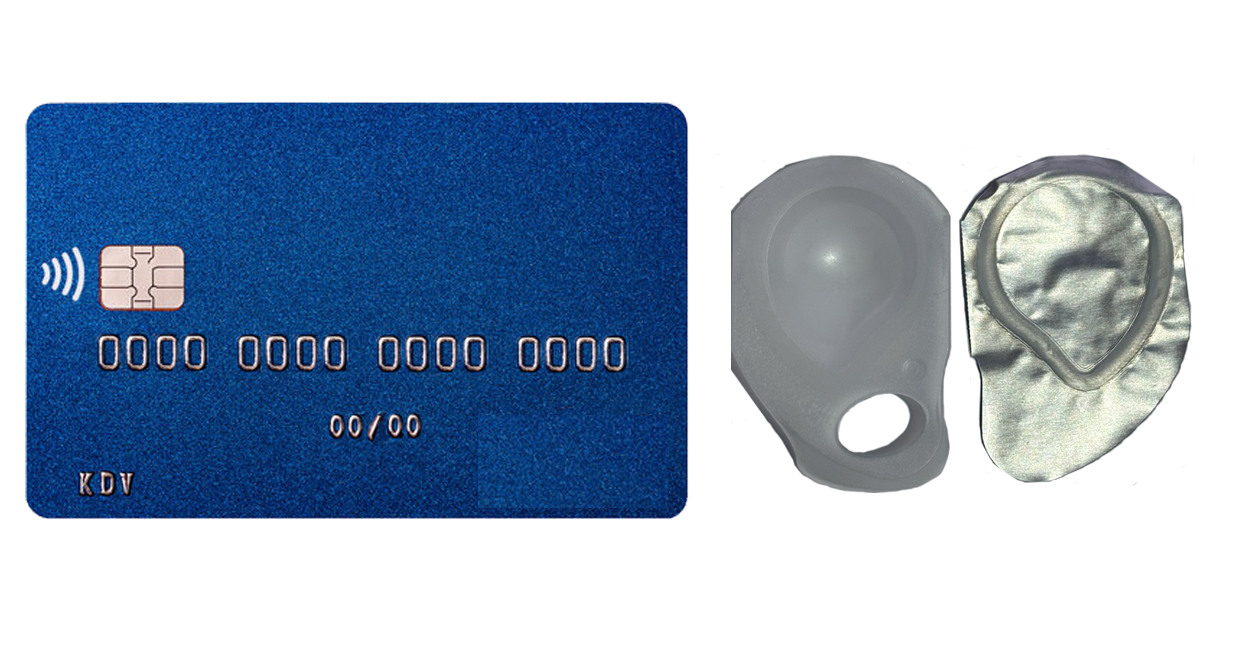
A blister pack and its foil seal, next to a standard credit card. Both pieces sit below the 50 mm minimum that most recycling machinery can handle.
The Gap Problem
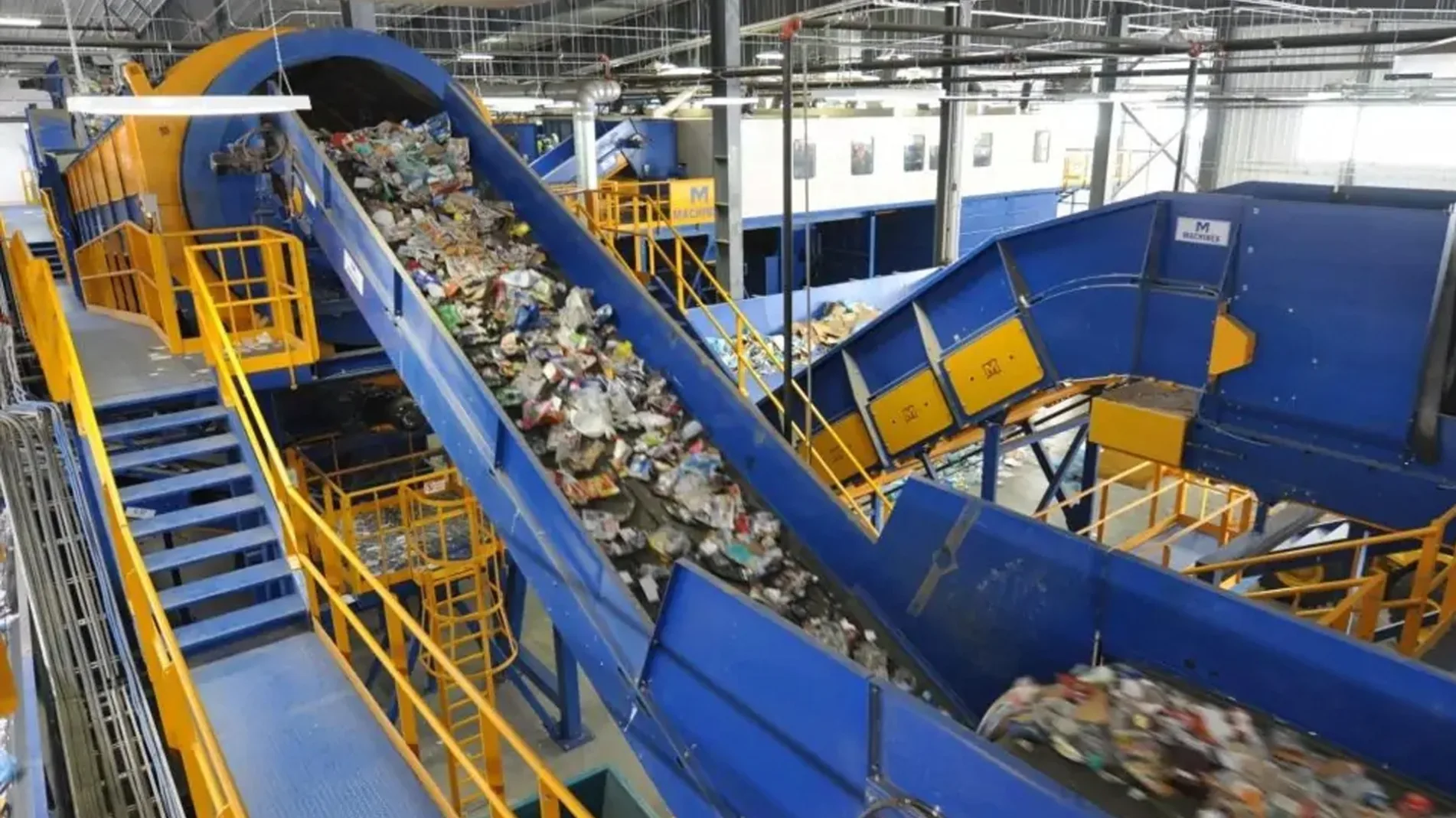
Industrial recycling facilities process hundreds of tons of material every day. The machinery, including rotating screens, optical sorters, and conveyor belts, is calibrated to objects above a certain size. That minimum is typically 50 mm.
Below 50 mm, objects don't get sorted. They fall through gaps in the equipment. Those gaps are engineered to exist because the machines need somewhere for small contaminants to go. Anything that falls through gets buried or incinerated.
"50 mm is typically the smallest size that most recycling facilities can handle. These machines have gaps, and anything that falls through the gap is either buried or incinerated." Mr. Aldo Zucaro, CooperCompanies, 2025
A contact lens blister pack is smaller than 50 mm. So is the foil seal. So are the tamper rings on solution bottles. They enter the facility, hit the machinery, and fall through every time. Not because anyone is doing anything wrong, but because the physics of the machine make it inevitable.
This is why putting blister packs in the recycling bin at home doesn't work. It's not because your local facility is underfunded or poorly run. The machinery everywhere operates the same way. The gap is an industry-wide standard, not a local exception.
What Accumulates When Nothing Gets Through
We detail the full scale of the contact lens waste problem in our pillar article here, but the short version is this: if you wear daily disposable lenses, you open two blister packs every day. That's 730 a year, plus 730 foil seals. Every one of them smaller than the machine can catch.
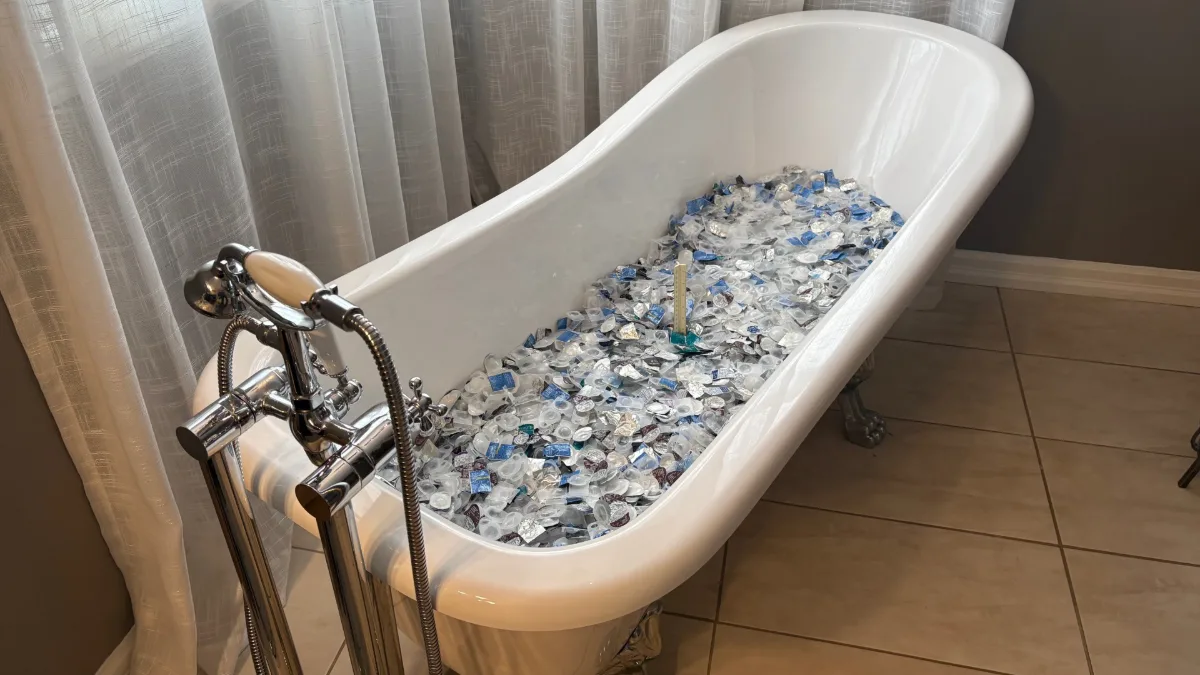
7,244 blister packs. One year. Ten wearers. We physically collected and counted every one. All of them too small for standard recycling machinery to catch.
We filled a bathtub because the only way to make an invisible problem visible is to put it somewhere people can't look away from. Each individual pack disappears in two seconds. Seven thousand of them fill a bathtub.
The Industry Is Actively Working on Solutions
This is not a problem the contact lens industry is ignoring. Manufacturers are investing real effort in closing the gap, and there are two meaningful approaches being pursued. As a team that spends a lot of time thinking about this problem, we find both genuinely interesting. We also ask ourselves some honest questions about how each one plays out in practice.
Closing the gap at the facility
The first approach involves working with material recovery facilities to invest in machinery capable of handling smaller objects and to narrow their sorting gaps. If facilities could process objects smaller than 50 mm, blister packs could move through the recycling stream like any other material.
When we think through this one, the question we keep returning to is economics. MRFs are businesses operating on thin margins, and retrofitting industrial sorting machinery is a significant capital investment. We find ourselves wondering whether the volume of contact lens packaging alone would justify that cost at facilities around the world. That's not a criticism of the approach. It's just the question we sit with when we think about how long this track might take to produce results at scale.
Redesigning the packaging
The second approach is redesigning the packaging itself so it behaves differently in the recycling stream.
"How can we get them to stack together? How can we get them to link? How do we get them to collect together such that they can withstand the stress of recycling but still be larger than 50 mm?" Mr. Aldo Zucaro, CooperCompanies, Optometry Today, 2025
One concept being developed involves a plastic backbone, a stick or spine that blister packs are loaded onto as they're used. Over time the wearer builds up a combined object large enough to clear the 50 mm threshold, then puts the whole assembly in the recycling bin. It's a genuinely creative way to think about the problem.
When our team talks through this one, two questions come up. The first is physical durability. Recycling trucks compress everything they collect, and material at a facility gets moved around by heavy machinery. We wonder whether the assembled backbone would stay intact through that process. If it breaks apart, the individual packs fall below 50 mm again and the same gap problem returns.
These are the questions our team works through internally. The industry is putting serious effort into both approaches, and Mr. Zucaro's summary captures where things stand honestly: "We're making progress. We're not quite there, but we're making progress."
We take that at face value. The progress is real, and the intent is serious. What it also means is that today's blister packs need somewhere to go in the meantime.
Why We Built LensLoop Around This Problem
Our founding team previously built Sightly, a platform that let eye care practices offer online contact lens ordering directly to their patients. At its peak, over 10,000 patients were ordering through it.
When we started paying close attention to the contact lens waste problem, the 50 mm constraint shaped how we thought about the solution. If the machinery at the end of the chain can't catch blister packs, the most reliable fix is to capture them before they ever reach it. Not a better drop-off program, and not waiting on a redesigned machine. Recovery at the moment the waste is created, in the bathroom, when the lens comes out.
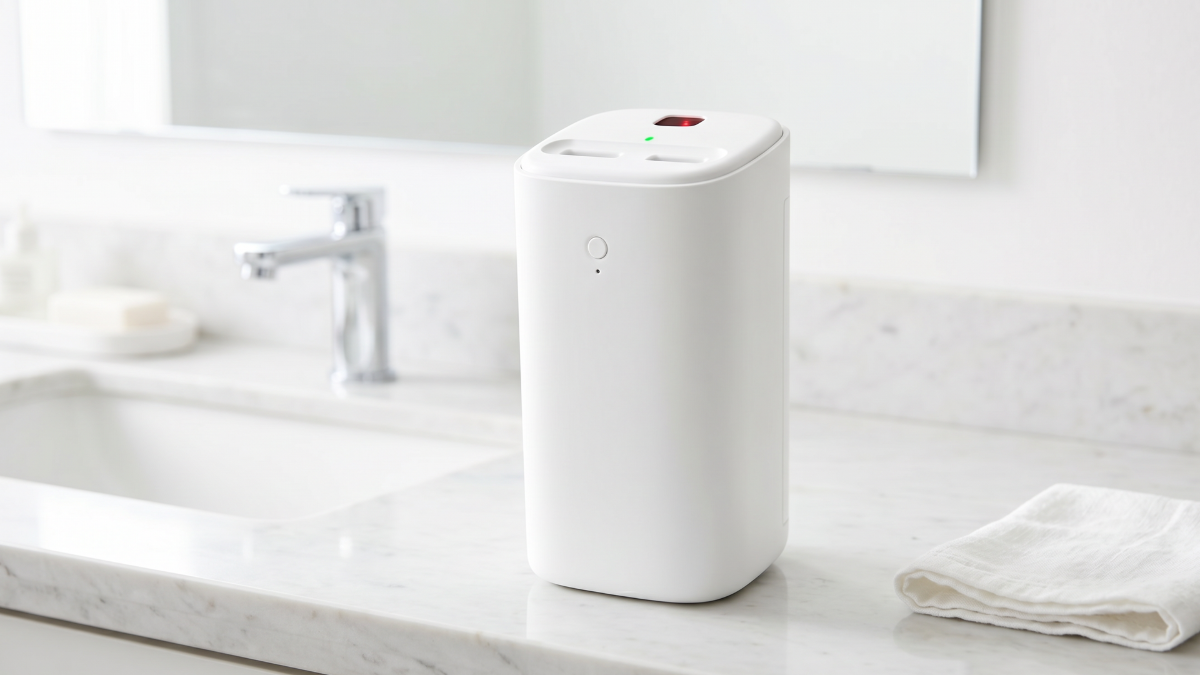
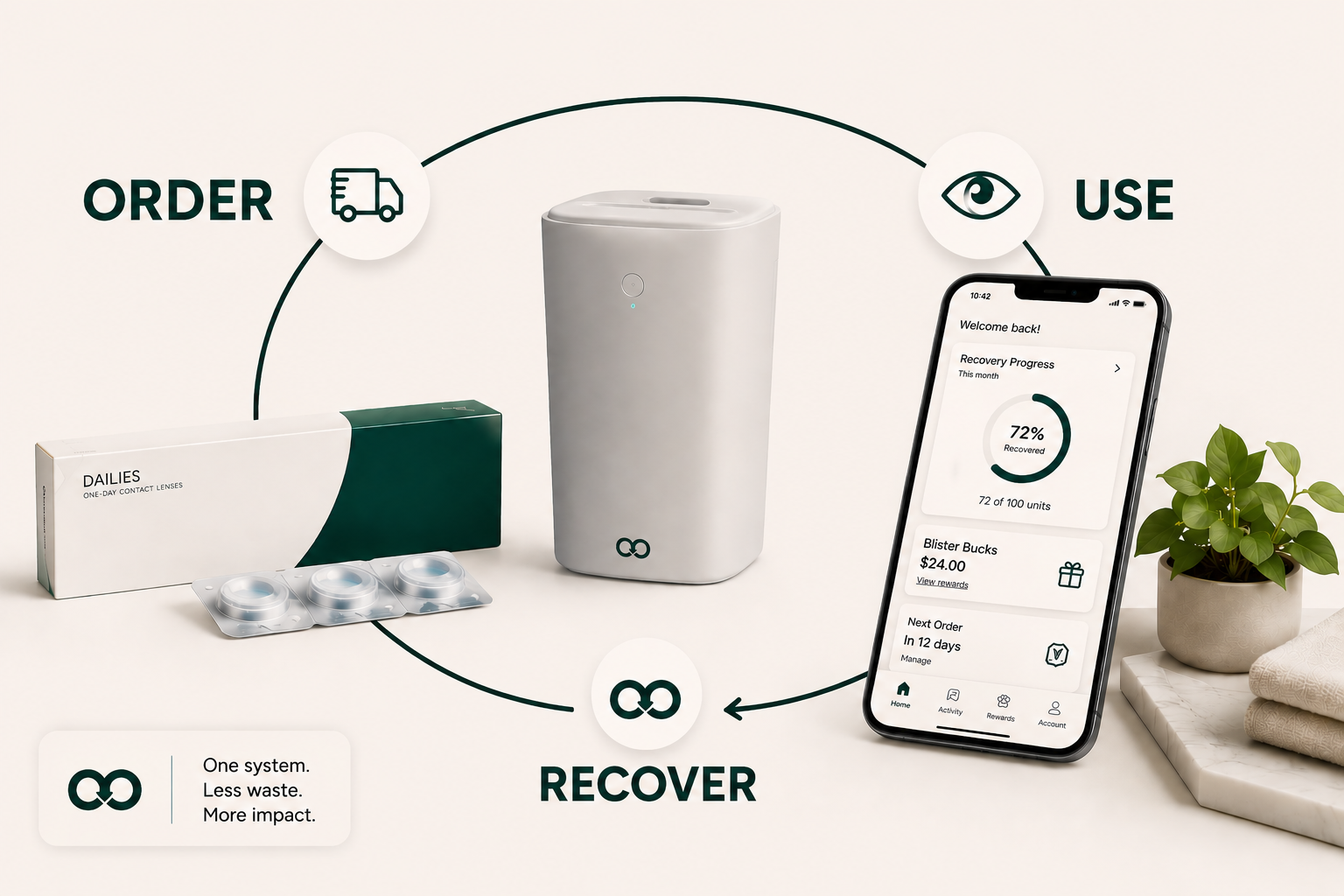
LensLoop puts a recovery unit on the bathroom counter. Lenses arrive by subscription, with the recovery unit shipping alongside the first order. After removing a lens, the blister pack, foil, and lens go straight in. No bag to remember. No trip to plan. No drop-off to find. The app tracks recovery, earns Blister Bucks rewards, and manages the next order. We handle return logistics. A full walkthrough of how the system works is available in our main article.
The blister packs never reach a facility with a gap problem, because they're captured before they get that far. That's the core idea, and the beta results gave us confidence it works in practice.
Over 18 months of beta testing in real bathrooms with real daily routines, we achieved a 93% per-user capture rate. We physically recovered and counted 2,316 units. The 7% we didn't capture came from travel days, illness, and away-from-home routines, which is the honest ceiling of any bathroom-based system.
The industry solutions and LensLoop aren't in competition. If packaging redesigns and facility upgrades eventually close the machine gap, that's a genuinely good outcome for everyone. What we're focused on is the waste being generated right now, by people who want to do the right thing and currently have no practical way to do it.
We've proven the capture rate. Now we need the scale.
14 billion lenses get thrown away every year in the US. We've shown that 93% of them don't have to be — if the recovery system is in the right place at the right time. What we need now is more people in the system to prove it holds.
If you wear contact lenses, this is the simplest thing you can do. Join the waitlist. When we're ready to ship, you'll be first.
No commitment. You'll be the first to know when we open.
Frequently Asked Questions
Why can't contact lens blister packs go in the recycling bin?
It's not the material. Blister packs are made from polypropylene and aluminum foil, both technically recyclable. The problem is size. Standard recycling machinery handles objects above roughly 50 mm. A blister pack is smaller than a credit card and falls below that threshold, passing through gaps in the sorting equipment and ending up landfilled or incinerated. Specialty programs like the Bausch + Lomb ONE by ONE program run with TerraCycle are designed to handle them, but require drop-off at a participating location.
What is the 50 mm recycling minimum?
Industrial recycling facilities use rotating screens and sorting machinery with gaps calibrated to a minimum object size, typically around 50 mm. Objects smaller than this fall through the gaps rather than being sorted and processed. They're either buried in landfill or incinerated. Contact lens blister packs, foil seals, and solution bottle caps all fall below this threshold.
Is the contact lens industry trying to fix this?
Yes. Manufacturers like CooperVision are working on packaging redesigns and pushing material recovery facilities to invest in machinery capable of handling smaller objects. Both efforts are real and ongoing. As Mr. Zucaro put it: "We're making progress. We're not quite there, but we're making progress."
How does LensLoop solve the problem today?
LensLoop captures waste at the source, in the bathroom, before it ever reaches a facility with a gap problem. A countertop recovery unit collects blister packs, foils, and lenses at the moment they're created. Lenses arrive by subscription and the recovery unit ships with the order. No storage, no trip, no drop-off. An 18-month beta achieved a 93% per-user capture rate. LensLoop is currently expanding and accepts waitlist registrations at getlensloop.com.
What is Point-of-Use Recovery for contact lenses?
Point-of-Use Recovery (PoUR) places recovery infrastructure at the exact moment and location waste is generated — rather than requiring consumers to store, transport, and deliver waste later. For contact lenses, this means bathroom-based systems integrated into the daily lens removal routine. The goal is to make recovery the default action, so participation does not depend on sustained motivation or deliberate behavior change.
What are the existing contact lens recycling programs in the US & Canada?
The primary program is the Bausch + Lomb Recycling Program, launched with TerraCycle. In the US, as of April 2026, it had recovered nearly 725,000 pounds of contact lens waste — more than 119 million units — from participating eye care clinics and retailers. All current programs require consumers to travel to a drop-off site, which limits participation.
What is LensLoop?
LensLoop is a home-based contact lens waste recovery system built around Point-of-Use Recovery. It combines a lens subscription with a bathroom-based recovery unit and a companion app — so that recovery happens as part of the routine the wearer already has, with no additional storage, travel, or deliberate behavior change required. A beta program has achieved a 93% unit capture rate. LensLoop is currently expanding its user base and accepts waitlist registrations at getlensloop.com.
Sources & References
- Zucaro, A. (2025). Sustainability interview. Optometry Today. CooperVision / CooperSurgical. [50 mm recycling threshold; "wonderfully recyclable" quote; packaging redesign efforts; pyrolysis; silicone hydrogel recovery.] Video: youtube.com/watch?v=5O4IUGudQNo
- Schulz, M. (2025). Contact lens waste management interview. Optometry Today / Core. [Solution bottle cap recycling; specialty program guidance; sustainableeyecare.com.]
- Eyes on Eyecare (2025). 2025 Contact Lens Industry Report. [40.9M US wearers; 14B annual lens discards.] eyesoneyecare.com
- TerraCycle / Bausch + Lomb (2026, April). ONE by ONE Recycling Program recovery reporting. [Well under 1% of annual stream recovered.]
- LensLoop (2026). Beta program results: 18-month point-of-use recovery pilot. Internal data. [93% capture rate; 2,316 units recovered; 7,244 blister pack physical count.]