
Key Takeaways
"Billions of units of small-format plastic packaging, including bottle caps, pill bottles, and cosmetics containers, go to landfill every year. The material is recyclable. The equipment simply was not built to catch it."
"Maybelline New York approached Closed Loop Partners' Center for the Circular Economy in 2022 to help solve small-format plastic recovery. By 2024, Kraft Heinz, L'Oréal, P&G, and Target had joined the effort."
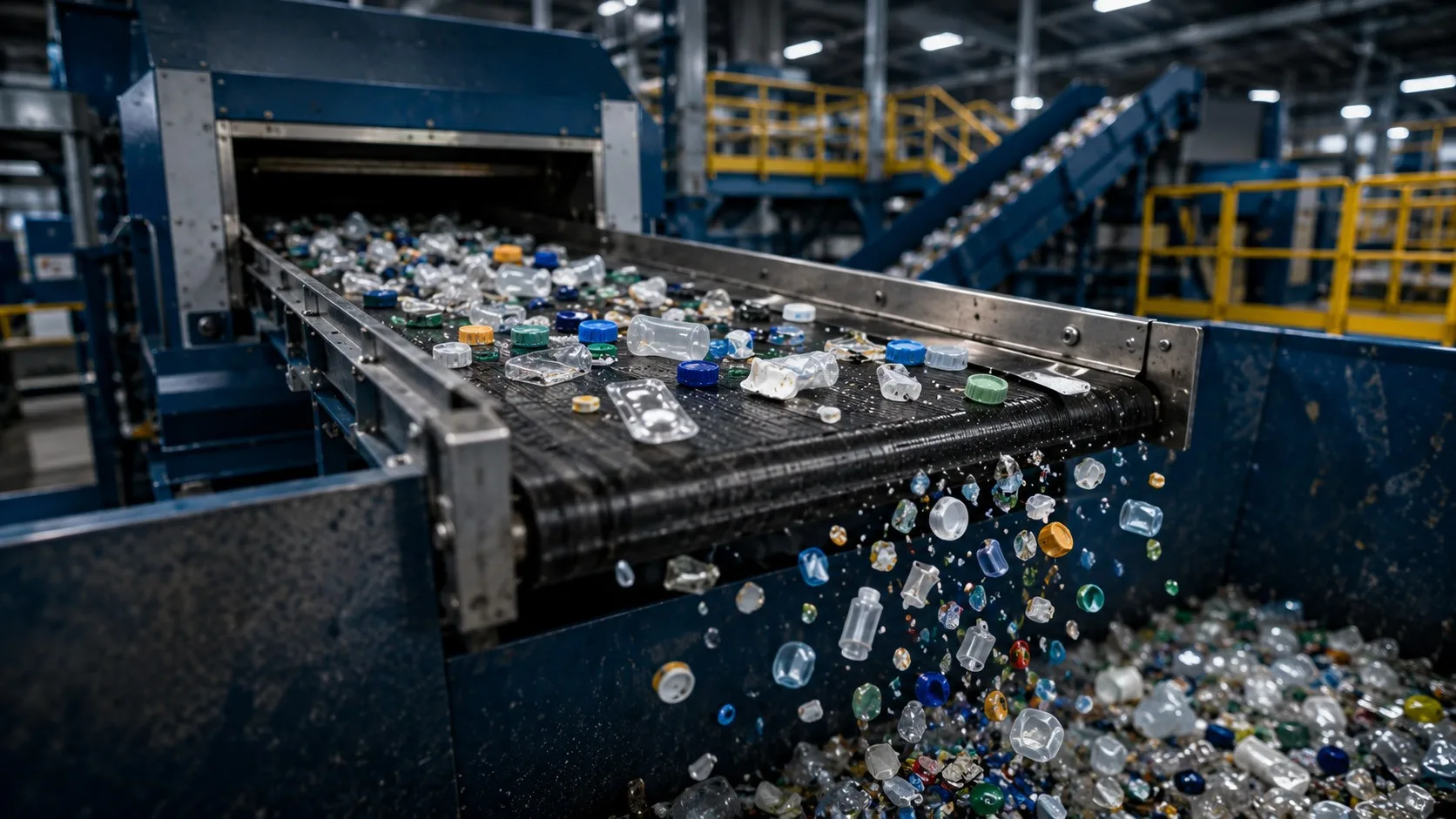
"After installing a new glass screen at a materials recovery facility and running 18 months of field testing, contamination from 2-to-4-inch plastics dropped 67%. The recovered material also had real market value."
"Three-quarters of the mechanical and molecular recyclers contacted said they wanted to buy the recovered plastic. The demand already existed. What was missing was a way to physically catch the material."
"The retrofit that cut contamination by 67% targets rigid, single-material items 2 to 4 inches wide. Contact lens blister packs are smaller than that and made of two bonded materials: plastic and foil. That means this fix, as built, still will not catch them."
Small Plastic Has Always Had a Size Problem
Walk into a materials recovery facility and you will see conveyor belts moving a river of bottles, cans, and cardboard past screens, air jets, and optical scanners. The equipment is calibrated to catch objects of a certain size. Anything smaller than roughly two inches falls through the gaps. It is not sorted, not rejected, or intentionally discarded. It is simply missed.
That is the fate of what the recycling industry calls small-format packaging: bottle caps, pill bottles, cosmetics containers, and yes, contact lens blister packs. These items are made from recyclable materials. They are also functionally invisible to the machines built to recover them.
Closed Loop Partners' work changes the conversation around small-format plastics. The question is no longer whether these materials have value or whether they can be recovered. The question is where recovery needs to happen along the waste journey. For some materials, the answer is an upgraded MRF. For others, recovery has to begin much earlier, before the material ever has a chance to be lost to landfill.
Earlier, we wrote about why the recycling bin is not the real problem. Small items like contact lens blister packs often never have a realistic chance of being recovered because conventional sorting equipment was not designed to catch them. Read: The recycling bin isn't the problem. The system is.
Why Small Packaging Falls Through the System
Here is the mechanism. Consumers often "wish-cycle" by tossing something in the recycling bin because it feels recyclable, even when the local program cannot process it. Small plastic items are a classic case. They get sorted alongside glass and, because they are too small for the screens to catch, they contaminate the glass stream instead of getting pulled out. Contaminated glass is worth less. Some of it gets rejected outright and sent to landfill along with the plastic that caused the problem.
"Small-format plastic does not fail to recycle because it is not recyclable. It fails because it contaminates the stream next to it, turning one missed item into two lost materials."
Four of the Biggest Consumer Brands Bet on Fixing It
Maybelline New York went to Closed Loop Partners' Center for the Circular Economy in 2022 with this exact problem: small-format packaging with nowhere to go. By 2024, Kraft Heinz, L'Oréal, P&G, and Target had all joined the same effort. That represents beauty, food, consumer packaged goods, and retail. Four different industries were sitting on the same unsolved packaging category.
When that many companies with that much packaging volume show up for the same problem, it's not a niche concern. It's a gap in the system big enough that nobody could route around it on their own.
"It was so important to partner with Closed Loop Partners' Center for the Circular Economy to pioneer solutions for small-format recycling and to help us and the beauty industry accelerate our sustainable transformation." Trisha Ayyagari, Global Brand President, Maybelline New York
The Fix Was Physical, Not Behavioral
A lot of packaging sustainability work stops at research and recommendations. This did not. Closed Loop Partners ran audits at half a dozen materials recovery facilities, including one owned by Circular Services, to see exactly what was in the waste stream and what it was worth. The team then built and tested new sorting equipment designed specifically to catch small-format plastics, something most MRFs simply do not have.
The core of it was a glass screen installed at a real facility, running for 18 months against real material, not a lab sample.
Less contamination meant two things at once. The recovered glass was worth more, and the plastic that used to contaminate it was now sitting in its own stream, clean enough to actually sell.
The Market Was Already Waiting
Capturing the material is only half the problem. Someone also has to want to buy it. The team reached out to mechanical and molecular recyclers across the country to see if there was actually a market for small-format recovered plastic.
That is the detail that makes this more than a pilot with good PR. The demand side was never the problem. Recyclers wanted the material. Nobody had built a way to get it to them clean and separated.
"We believe scaling these innovations will improve the recyclability of plastic and create a viable end-market for our materials." Marissa Pagnani McGowan, Chief Sustainability Officer, North America, L'Oréal Groupe
From Research to Real Infrastructure
The results were published in 2025 and picked up widely enough that other brands and recyclers started asking to join. The team is now moving past the pilot facility. They are preparing to install this equipment at a California facility as a proof of concept for recovering small-format plastic at real scale.
California is not a random choice. SB54, the state's producer responsibility law, takes full effect January 1, 2027. That means the companies that make and sell packaging will be responsible for funding its recovery. A law like that turns "would be nice to fix" into "has to be fixed, on a deadline." That is exactly the kind of pressure that gets infrastructure built instead of studied.
What the Glass Screen Catches, and What It Doesn't
It is tempting to read a result like this and assume the small-format packaging problem is basically solved. It is not, at least not for everything. The retrofit is built for a specific kind of object: rigid, single-material, roughly 2 to 4 inches. That covers a lot of packaging. It does not cover all of it.
| Attribute | Bottle Caps / Pill Bottles (what the retrofit targets) |
Contact Lens Blister Packs |
|---|---|---|
| Material composition | Single material (rigid plastic) | Composite: plastic tray + foil lid |
| Typical size | 2"–4", within screen range | Smaller than 2", below screen range |
| Contamination at source | Dry, generally clean | Saline residue on nearly every unit |
| Caught by MRF retrofit | Yes, once installed | No, it falls below the size and material threshold |
| Where recovery has to happen | Municipal recycling stream | Point-of-use, at the moment of disposal |
This is not a limitation of the work. It simply defines its boundaries. MRF upgrades can recover enormous volumes of valuable small-format packaging that were previously lost. They also help identify the materials that still require a different recovery pathway. Contact lens blister packs fall into that second category because they are generated in the bathroom, contaminated at the point of disposal, and smaller than the equipment was designed to target.
What This Means for Contact Lens Waste
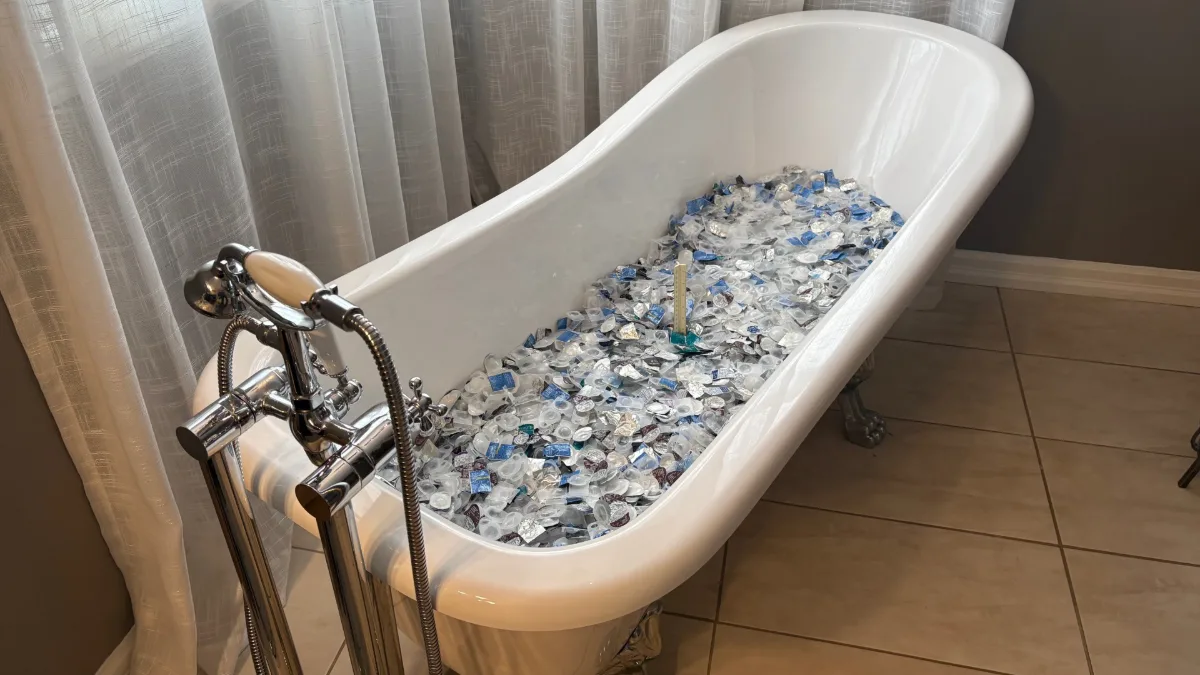
7,244 blister packs. One year of waste from 10 daily lens wearers. Every one of them is small-format plastic. Every one of them is also smaller and more contaminated than what the new MRF equipment is built to catch.
The work being done by Closed Loop Partners reinforces a simple idea: different materials require recovery systems at different points along the waste journey. Bottle caps and pill bottles can increasingly be recovered downstream through upgraded MRF infrastructure. Contact lens blister packs present a different challenge. They are generated in bathrooms, contaminated at the point of disposal, and often discarded into systems that were never designed to recover them. By the time they arrive at an MRF, if they arrive at all, the opportunity for recovery has largely been lost.
"The future of small-format recovery is not a single piece of infrastructure. Some materials can be recovered downstream at the MRF. Others need to be captured upstream, before they ever enter the waste stream. Contact lens packaging sits firmly in that second category."
Point-of-use recovery is not an alternative to MRF recovery. It is an extension of it. The goal is the same: keep valuable materials out of landfill and return them to the circular economy. The difference is where the recovery infrastructure begins. MRFs recover materials after disposal. LensLoop is designed to recover certain materials before disposal ever occurs.
How LensLoop Catches What the MRF Can't
We built LensLoop around a simple idea: if a material is unlikely to be recovered once it enters the waste stream, the recovery infrastructure needs to move upstream and meet the material where it is created.
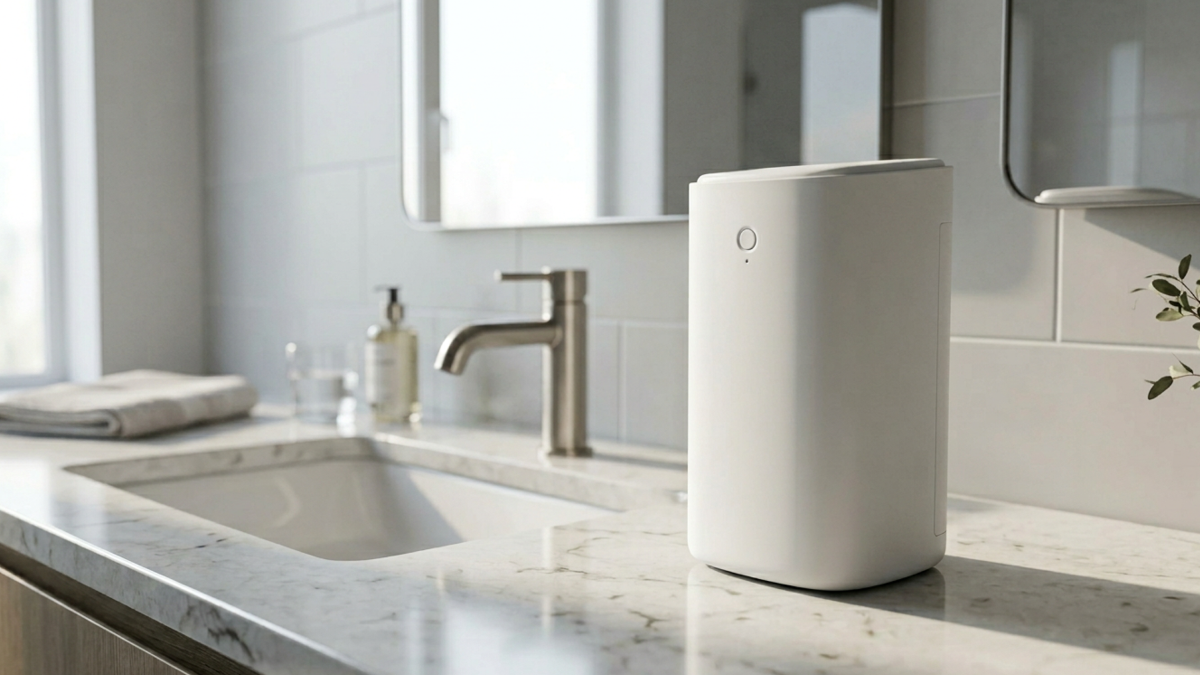
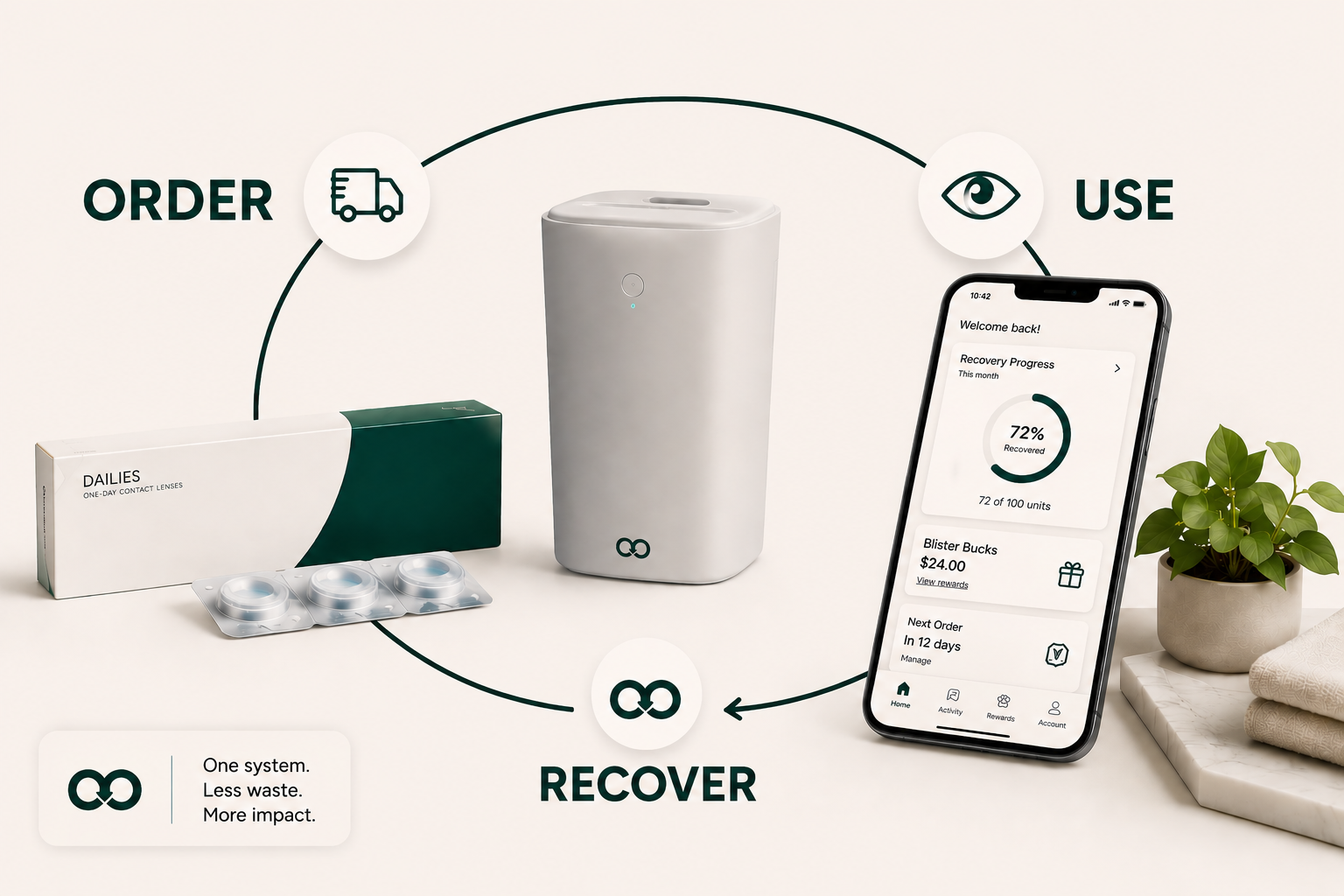
No sorting screen has to be small enough or dry enough to catch a blister pack, because it never enters that stream in the first place. The beta results back this up: 93% per-user capture rate over 18 months, with 2,316 units recovered at the exact moment and place the waste was created.
"Closed Loop Partners has demonstrated that small-format plastics have value once they are captured. LensLoop is focused on the materials that still need to be captured before they ever reach the recycling system. Together, these approaches extend recovery infrastructure across the entire waste journey, from the point of use to the MRF."
We've proven the capture rate. Now we need the scale.
14 billion lenses get thrown away every year in the US. We've shown that 93% of them don't have to be — if the recovery system is in the right place at the right time. What we need now is more people in the system to prove it holds.
If you wear contact lenses, this is the simplest thing you can do. Join the waitlist. When we're ready to ship, you'll be first.
No commitment. You'll be the first to know when we open.
Frequently Asked Questions
What is small-format packaging?
Small-format packaging refers to rigid plastic packaging roughly under 2 to 4 inches, including bottle caps, pill bottles, cosmetics containers, single-serve tubs, and contact lens blister packs. The plastic itself is usually recyclable, but the size means standard materials recovery facility (MRF) equipment cannot detect or sort it, so it ends up in landfill or contaminating other material streams.
Why does small plastic packaging contaminate glass recycling?
When consumers put small plastic items in curbside recycling, they get sorted alongside glass. Because most sorting equipment cannot detect items under about 2 inches, the plastic is not pulled out. It stays mixed with the glass, lowering its value and sometimes causing the whole batch to be rejected and landfilled.
Why does small plastic packaging contaminate glass recycling?
When consumers put small plastic items in curbside recycling, they get sorted alongside glass. Because most sorting equipment cannot detect items under about 2 inches, the plastic is not pulled out. It stays mixed with the glass, lowering its value and sometimes causing the whole batch to be rejected and landfilled.
What did Closed Loop Partners' small-format packaging project achieve?
Closed Loop Partners' Center for the Circular Economy worked with Maybelline New York, Kraft Heinz, L'Oréal, P&G, and Target to research and test new recovery equipment for small-format plastics. After installing a glass screen at a materials recovery facility and testing it for 18 months, contamination from 2-to-4-inch plastics dropped 67%. Three-quarters of recyclers contacted said they wanted to buy the recovered material. The team is now preparing to install equipment at a California facility to prove the model at scale.
What is Point-of-Use Recovery?
Point-of-use recovery means capturing waste at the exact location and moment it is generated, instead of relying on a downstream facility to sort it out of a mixed waste stream. For contact lenses, that means a bathroom-based recovery unit integrated into the daily lens removal routine, so recovery does not depend on an item being the right size, dryness, or material for industrial sorting equipment.
What is LensLoop?
LensLoop is a home-based contact lens waste recovery system built around Point-of-Use Recovery. It combines a lens subscription with a bathroom-based recovery unit and a companion app, so recovery happens as part of the routine the wearer already has, with no sorting, storage, or dedicated trip required. A beta program achieved a 93% per-user capture rate. LensLoop is currently expanding its user base and accepts waitlist registrations at getlensloop.com.
Sources & References
- Closed Loop Partners' Center for the Circular Economy (2026). Saving small-format packaging from landfills. Case study. [Billions of units/year; 2"–4" size range; 67% contamination reduction; 18-month field test; 75% recycler interest; 2022 Maybelline engagement; 2024 Kraft Heinz, L'Oréal, P&G, Target engagement; Circular Services MRF partnership; California installation and SB54 timeline.] closedloopcenter.com
- Trisha Ayyagari, Global Brand President, Maybelline New York (2026). Quoted in Closed Loop Partners' Center for the Circular Economy case study.
- Marissa Pagnani McGowan, Chief Sustainability Officer, North America, L'Oréal Groupe (2026). Quoted in Closed Loop Partners' Center for the Circular Economy case study.
- State of California (2022). SB 54: Plastic Pollution Prevention and Packaging Producer Responsibility Act. Full effect January 1, 2027.
- Eyes on Eyecare (2025). 2025 Contact Lens Industry Report. [14B annual US discards.] eyesoneyecare.com
- LensLoop (2026). Beta program results: 18-month point-of-use recovery pilot. Internal data. [93% capture rate; 2,316 units recovered.]
- LensLoop (2026). Contact Lens Waste: Why Recycling Programs Keep Failing. [7,244 blister packs / 10 wearers, one year bathtub visualization.] getlensloop.com
- LensLoop (2026). The recycling bin isn't the problem. The system is. [Why contact lens blister packs fall below the 50 mm recycling machinery threshold.] getlensloop.com