
Key Takeaways
"Waste has negative demand. Nobody wants used diapers at any price — you have to pay to get rid of them. That's the economic category recycling is fighting against. It's not a behavior problem. It's a structural one."
"What makes something recyclable has nothing to do with whether the material can be recycled. It has everything to do with whether the company collecting it can make money doing so. Aluminum gets recycled. Flexible pouches don't. The difference is economics, not chemistry."
"Funding the gap solves the economics of recycling. It doesn't solve participation. The ONE by ONE program has funded contact lens recovery since 2016. Recovery is still under 1% because the friction of drop-off participation remains — and disposal has no friction at all."
About the talk
Tom Szaky is the founder and CEO of TerraCycle, a company that has spent over two decades figuring out how to recycle things the mainstream system won't touch: cigarette butts, chip bags, contact lenses, coffee capsules. If anyone has earned the right to explain why recycling is structurally broken, it's Mr. Szaky.
In his TEDx talk, Mr. Szaky lays out the economic logic behind waste in a way that's surprisingly simple once you see it. We found it one of the most educational 12 minutes we've spent on this topic. We'd recommend watching it first, then reading this alongside it.
What follows is our summary of the key arguments Mr. Szaky makes, and then at the end, what those arguments mean for contact lens waste specifically.
Key argument 1: Waste has negative demand, and no textbook teaches that
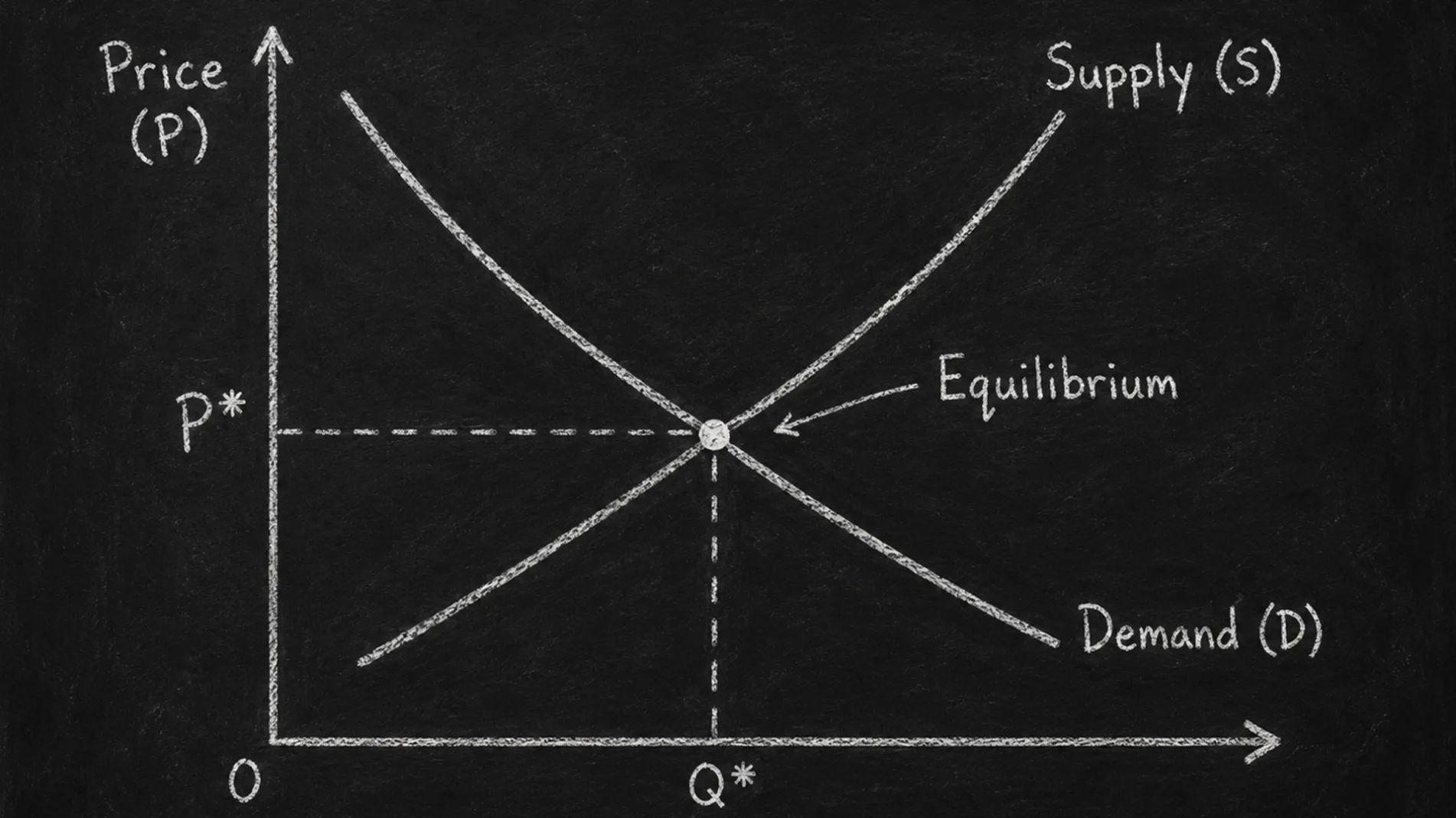
Mr. Szaky opens with a concept from economics that almost nobody discusses. He asks the audience to apply basic supply and demand logic to something unusual: a used diaper.
The setup is straightforward. Every diaper sold will become a used diaper. There is actually more weight of dirty diapers produced each year than new ones. Supply is enormous. But what does demand look like? Mr. Szaky asks what anyone would pay for a bag of used diapers. Would they take them for free? Would they need to be paid to accept them?
The answer, as Mr. Szaky frames it: demand isn't zero. It's negative. Nobody wants used diapers at any price. You have to pay to get rid of them. No economics textbook accounts for this, because the entire supply and demand framework assumes demand is at least zero. Waste lives in the negative quadrant. It's the only category of material we are willing to pay to get rid of.
Mr. Szaky's framing: "99% of what we buy, we will have paid a garbage company to take it off our hands within the year of purchase. The garbage industry will one day legally own everything we possess, with no exception."
It's a reorienting thought. The problem isn't that recycling keeps failing. The problem is that waste is structurally designed to have negative value, and recycling is being asked to reverse that without the right conditions to do it.
Key argument 2: We built a world full of materials nature can't digest
Mr. Szaky then explains how we arrived at this situation. Waste itself isn't new, he points out. Every organism produces outputs it can't use. A gazelle can't breathe what it exhales. Those outputs aren't useless though. They become inputs to other organisms. In nature, there's no truly useless output. Everything cycles.
For most of human history, Mr. Szaky argues, people fit into that pattern. Go back 75 to 100 years. The chair you'd sit on would be wood and metal. Food came packaged in its own skin or in glass. Clothes were cotton, wool, or silk. All of it within nature's digestive range.
Then two things happened at once, and they compounded each other badly.
First, Mr. Szaky points out, we invented materials nature can't process. Plastics, nylons, polyesters, silicone hydrogels. Extraordinarily useful while you're using them. Completely indigestible once you're done. Nature hasn't had time to evolve the right enzymes. It doesn't have the digestive systems yet.
Second, we invented consumerism. Mr. Szaky cites a striking comparison: a hundred years ago, the average person bought two items of clothing per year and wore them for roughly two decades before disposal. Today, it's 66 items per year, worn a handful of times before disposal. To illustrate how deliberate this shift was, Mr. Szaky shows a photo from Life magazine in the 1950s celebrating the convenience of disposability as genuine progress.
Mr. Szaky is careful not to frame this as a moral failure. He's empathetic about it. Convenience is real. The cost of disposal is invisible. So people choose the easier path, every time. He sees that as the design constraint, not the character flaw.

A 1950s ad celebrating the new world of plastic consumer goods. Mr. Szaky references this era as the moment disposability was marketed as progress, and we voted for it.
Image credit: https://www.inverse.com/article/48106-earl-tupper-how-tupperware-was-created
Key argument 3: Recyclability is a business decision, not a material property
This is the part of the talk we found most clarifying. Mr. Szaky makes the case that most people think of recycling as a public service, something society provides because it should exist, like road maintenance or healthcare. His argument is that it isn't.
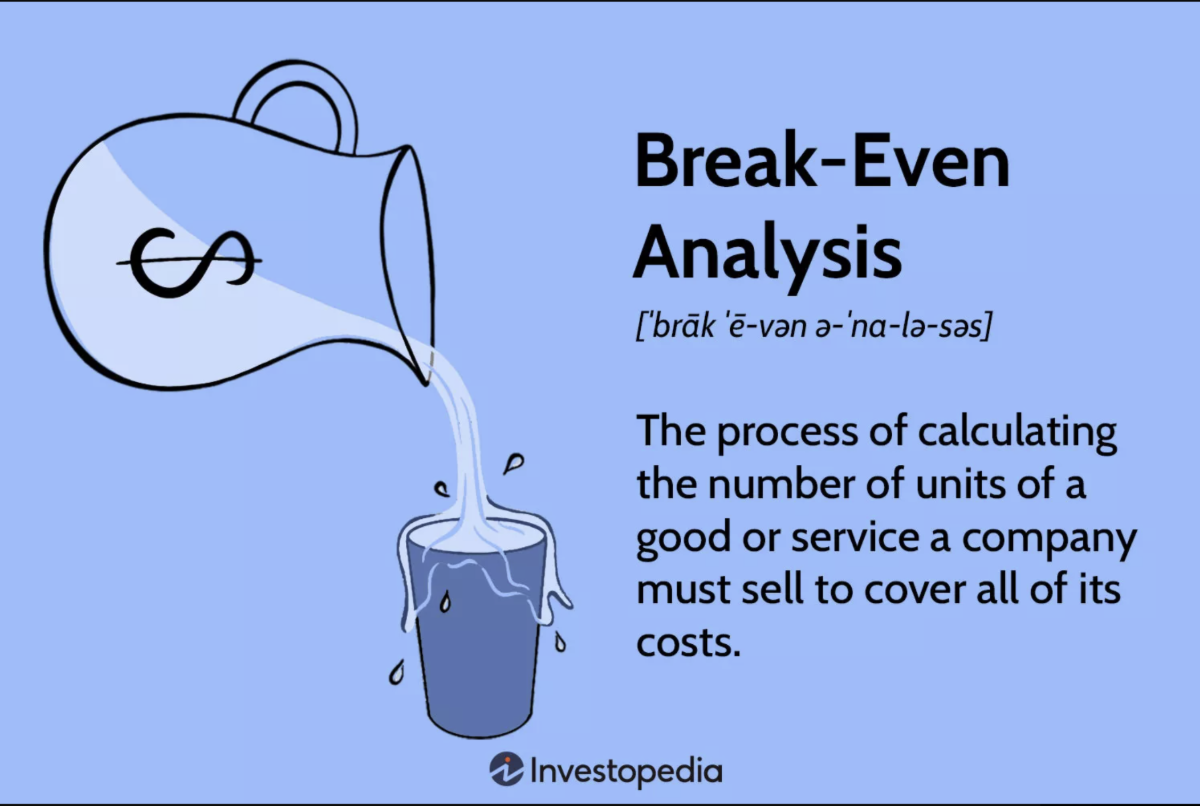
A break-even analysis determines the sales volume needed to cover fixed and variable costs, indicating the point at which a business neither makes a profit nor incurs a loss.
Image credit: https://www.investopedia.com/
There is no Hippocratic oath in recycling, Mr. Szaky says. No recycling company anywhere in the world is legally required to recycle anything it collects. A recycling company is a business. It picks up material when doing so is profitable and landfills it when it isn't. That's it.
Mr. Szaky's argument: what makes something recyclable has nothing to do with whether the material can be recycled. It has everything to do with whether the company collecting it can make money doing so.
Mr. Szaky explains the equation simply. A recycler pays to collect, sort, and process waste. Then they sell the recovered material. If the sale price covers the cost of everything that came before, it gets recycled. If not, it doesn't. That is the only driver.
To make it concrete, Mr. Szaky uses a thought experiment. Two cups appear in front of you: one solid gold, one plastic. Both filthy. Nobody is watching. Which do you clean and keep?
You take the gold one. Not because you're selfish. Because the value is obvious. The effort of cleaning it is clearly worth it. The plastic cup doesn't offer that return. To get someone to take the plastic cup, Mr. Szaky argues, you have to add enough money to make it worth their while. The value has to be in the object, or injected from outside. Without one of those two things, circularity doesn't happen.
Key argument 4: The drive to make things cheaper is making recycling harder
Mr. Szaky identifies the dominant trend in product design as cost reduction. Everything gets cheaper to make over time. That sounds like progress. For recycling economics, he argues, it's a slow disaster.
The example Mr. Szaky uses is US beverage packaging. When single-use containers replaced refillable bottles in the 1950s, the first format was aluminum. Profitable to recycle because recovered aluminum holds real value. Then manufacturers moved to plastic bottles to cut costs. Then cartons. Then flexible pouches. Each step made the container cheaper to produce.
Each step also made the recovered material worth less. Mr. Szaky shows that recycling rates track almost exactly with material value: aluminum stays high, plastic drops, cartons drop further, pouches approach zero. Not because the technology changed. Because the recovered material became less valuable as the packaging became cheaper to produce in the first place.
Key argument 5: Anything can be recycled. The question is who funds the gap.
This is where Mr. Szaky's own work at TerraCycle becomes the evidence for the argument. If the economics of recycling don't self-sustain, you can fix it by deliberately funding the gap between collection cost and recovered material value.
Mr. Szaky cites what TerraCycle has managed to recycle when that gap is funded: over a billion cigarette butts, over 100 million pounds of flexible film, guitar strings, shoes, and pharmaceutical blister packs. None of these would survive a standard market-driven recycling test. But when a brand, a government program, or a consumer fee closes the economics gap, the material moves.
Mr. Szaky is clear that there are only two paths to circularity. Either the object has value embedded in it naturally, like an aluminum can or a glass bottle with a deposit, or you inject money from outside the system. Without one of those two things, the waste goes to landfill. Not from negligence. From math.
Key argument 6: Reuse was always the better answer economically
Mr. Szaky's final argument is that recycling, even when it works perfectly, only recovers raw material. You still have to run the full manufacturing process again. Energy in, labour in, new production run. Reuse skips all of that. If the same container gets refilled, the entire product retains its value without another production cycle.
Mr. Szaky points out this is exactly how the world worked less than 100 years ago. Milk was delivered in returnable glass bottles. Shoes got resoled. Socks got darned. Clothes got repaired. Not out of environmental virtue. Out of economic logic. Things cost enough to be worth fixing.
We abandoned it voluntarily, Mr. Szaky says, and he's empathetic about why. Convenience won. When it's faster to throw something out than to fix it, most people throw it out. That's a rational response to how costs were structured, not a moral failure.
Mr. Szaky's conclusion: bringing reuse back at scale means making it feel exactly like a throwaway system. Not more virtuous. Not more effortful. The moment reuse requires more steps than disposal, disposal wins. Every time.
What this means for contact lens waste
Mr. Szaky's framework maps directly onto the problem we're trying to solve. Contact lens blister packs are polypropylene and aluminum. Both materials are technically recyclable. Neither makes economic sense through standard channels. The items are small, lightweight, saline-contaminated, and missed by standard sorting equipment. The recovered material value is low. The collection cost is high.
TerraCycle and Bausch + Lomb have already funded that gap through the ONE by ONE program, which has recovered over 100 million contact lens units since 2016. Mr. Szaky's own company proved the material can move when the economics are solved.
But here's the part the talk points to without naming it directly. Funding the gap solves the economics. It doesn't solve participation. The ONE by ONE program requires users to store their waste, travel to a participating location, and drop it off. That's friction disposal doesn't have. So despite the funding, recovery stays well under 1% of the 14 billion lenses discarded in the US every year.
The problem we're focused on at LensLoop is that second gap. Mr. Szaky is right that reuse has to feel like a throwaway system. We'd extend that to recovery more broadly: it has to happen in the place waste is created, at the moment it's created, without asking the user to do anything extra. If it doesn't, the garbage can wins by default.
For the full breakdown of the contact lens waste problem, the scale of what gets discarded, and what point-of-use recovery actually looks like, read our pillar article on contact lens waste.
We've proven the capture rate. Now we need the scale.
14 billion lenses get thrown away every year in the US. We've shown that 93% of them don't have to be — if the recovery system is in the right place at the right time. What we need now is more people in the system to prove it holds.
If you wear contact lenses, this is the simplest thing you can do. Join the waitlist. When we're ready to ship, you'll be first.
No commitment. You'll be the first to know when we open.
Frequently Asked Questions
Why is landfill cheaper than recycling?
Landfill has one cost: collection and burial. Recycling has three: collection, sorting, and processing. Then the recovered material has to sell for enough to cover all three. For low-value materials, it rarely does. Landfill wins by default. TerraCycle CEO Tom Szaky makes this argument in his TEDx talk on waste economics.
What is negative demand in economics?
Negative demand means you have to pay someone to take something away. Normal goods have positive demand. People pay to receive them. Waste is the opposite. Nobody pays you for a used diaper or a used blister pack. You pay to get rid of them. Tom Szaky uses the diaper example to make this point, noting that no economics textbook explores the negative quadrant where waste actually lives.
Why don't recycling companies have to actually recycle what they collect?
There is no law anywhere requiring a recycling company to recycle what it collects. Recyclers are businesses. They process material when doing so is profitable and landfill it when it isn't. As Tom Szaky puts it, there is no Hippocratic oath in recycling. The word "recycling" on a bin describes an intent, not a legal obligation.
Can hard-to-recycle materials actually be recycled?
Yes. TerraCycle has recycled cigarette butts, flexible film, guitar strings, shoes, and contact lenses. The question is who funds the gap between what it costs to collect and process the material, and what the recovered material is worth. When that gap is funded by a brand, a government program, or consumer fees, the material can move.
Why is reuse better than recycling economically?
Recycling recovers raw material but requires the full manufacturing process to run again. Reuse skips remanufacturing entirely. The object retains its value without another production cycle. Tom Szaky argues this is exactly how the world worked less than 100 years ago, before disposability became the dominant consumer model.
Why is contact lens waste so hard to recycle?
Contact lens blister packs are polypropylene and aluminum, technically recyclable but low value as recovered material. Collection costs are high, the items are small and saline-contaminated, and standard sorting equipment misses them. The economics require external funding. Even with funding, recovery stays under 1% of annual discards because existing programs require users to store waste and travel to a drop-off location.
Sources & References
- Tom Szaky, T. (2024). The economics of waste. TEDx Talk. TerraCycle. youtube.com
- TerraCycle / Bausch + Lomb (2026, April). ONE by ONE Recycling Program recovery reporting. [100M+ units recovered.]
- Eyes on Eyecare (2025). 2025 Contact Lens Industry Report. [14B annual US discards.] eyesoneyecare.com
- LensLoop (2026). Beta program results: 18-month point-of-use recovery pilot. Internal data. [93% capture rate; 2,316 units recovered.]