
Key Takeaways
"Most sustainability products fail not because people don't care, but because they require a new habit on top of everything else. The ones that scale don't change what people do. They change what happens during what people do."
"PlanetCare filters 98% of microfibers per wash cycle — without asking users to change anything about how they do laundry. The filter sits inside the routine that already existed. That's why it has 10,000 active users when most alternatives don't."
"LensLoop achieved a 93% per-user capture rate over 18 months by placing recovery at the exact moment contact lens waste is created. Not a drop-off somewhere down the road. In the bathroom. At the sink. Right then."
The Pattern That Shows Up Over and Over
There's a category of product that keeps working when most sustainability solutions fall flat. It doesn't win because people care more. It doesn't win because it's easier to use than the alternative. It wins because it attaches to something the person was already doing anyway.
You don't change the routine. You join it.
That sounds obvious when you say it out loud. But most environmental products are built the other way around: they ask the user to build a new habit, make a separate trip, remember something on top of everything else they already have to remember. The product is good. The behavior it requires is extra. That's why so many of them stall.
The ones that scale are different. They find a moment that already exists, slot in at that exact moment, and make recovery the default. The person keeps doing what they always did. The waste stops flowing where it used to flow.
"The products that solve waste problems at scale don't change what people do. They change what happens during what people do."
PlanetCare: What Happened When a Filter Joined the Laundry Routine
Microfiber pollution is one of the more invisible environmental problems out there. Every time you wash a synthetic garment — polyester, nylon, fleece — it sheds plastic fibers. Those fibers are too small for standard wastewater treatment to catch. They flow into rivers and oceans. They accumulate in fish, in soil, in the human body.
Researchers have found microplastic fibers in human blood, lungs, and brain tissue. Over 60% of clothing sold today is made from synthetic materials, which makes washing machines the single largest source of microfiber pollution entering waterways.
That's a real problem with a real source. So why has it taken so long to address?
Because the obvious solutions all required the person to do something different. Wash less. Buy only natural fibers. Hand-wash synthetics. Use a Guppyfriend bag. These are things people theoretically could do. In practice, almost nobody sustains them.
PlanetCare took a different approach. They built a filter that attaches directly to a washing machine's drain hose. It catches microfibers before they leave the machine. The user does nothing differently. They still do laundry exactly as they always have. The filter intercepts the problem at its source, inside the machine, inside the routine that was already happening.
The closed-loop piece matters too. When a cartridge is full, the user sends it back. PlanetCare removes the microfibers, refurbishes the cartridge, ships a clean replacement. No waste leaves the system. The user's only job is swapping the cartridge every 30 washes. Everything else is handled.
An independent study from the Polytechnic University of Turin, published in the Journal of Hazardous Materials in August 2025, tested PlanetCare against two competing filters under identical lab conditions. PlanetCare's filtration rate was nearly double one competitor and meaningfully higher than the other. It also showed the lowest pressure drop of the three, meaning water flows freely while more fibers are caught.
Performance matters. But performance alone doesn't explain 10,000 active users. What explains that is the decision to not ask those users to change anything.
"PlanetCare didn't solve the microfiber problem by changing how people do laundry. It solved it by fitting inside the laundry routine that already existed."
Why Routine Integration Works When Everything Else Doesn't
Behavioral researchers have spent decades studying why good intentions don't produce consistent behavior. The findings keep pointing to the same thing. Motivation isn't the bottleneck. Friction is.
BJ Fogg, a behavioral scientist at Stanford who has studied habit formation for over 20 years, describes behavior as a function of three things: motivation, ability, and a prompt. When all three line up, behavior happens. When any one is missing, it doesn't. Most sustainability programs rely on sustained motivation. That's the one variable they can't control.
What routine-integrated products do is take motivation out of the equation. They create ability by removing all friction from the action. They create the prompt by attaching to something that already triggers the routine. The user's motivation doesn't have to hold up over time, because the product doesn't need it to.
That's why drop-off programs recover a fraction of the waste they're designed for. It's not that people don't care. It's that caring isn't enough to reliably produce the behavior of driving somewhere, finding the bin, and depositing the waste. Every extra step between waste creation and recovery is a place where intention falls apart.
PlanetCare eliminated all those steps. The filter is physically at the point where waste is created. Every wash, without any decision from the user, the fibers are captured. That's the architecture.
Contact Lens Waste Has the Same Problem
Most contact lens wearers say they'd recycle their packaging if they could. That's consistent across surveys. The problem isn't that people don't care. It's that the programs designed to help them do something with that care are built the same broken way.
The primary program in the US, the Bausch + Lomb ONE by ONE program run with TerraCycle, requires consumers to travel to a participating clinic or retailer. You collect your lenses and blister packs over time, store them somewhere in your home, remember to bring them, and make the trip. It works for some people some of the time. By April 2026, the program had recovered nearly 725,000 pounds of contact lens waste — a meaningful number by any measure.
There are an estimated 40.9 million contact lens wearers in the US. About 60% wear daily disposables. LensLoop data is based on a full-time dailies wearer — 730 blister packs a year. Across the broader wearer population, the average works out to around 450 packs annually, based on typical purchasing patterns of five 90-pack boxes per year. The math on what's being captured versus what's being thrown away is not close, regardless of which number you use.
Less than 1% of contact lens waste gets recovered. The programs exist. The technology to recycle the materials exists. The people who say they want to participate exist. What doesn't exist is infrastructure at the point where the waste is actually created.
The waste is created in the bathroom, at the sink, in the 10 seconds it takes to remove a lens and toss the packaging. That's when recovery has to happen. Not later. Not after a trip somewhere. Right then.
What We Built, and Why We Built It This Way
Before LensLoop, the founding team built Sightly, a platform that let eye care practices set up online storefronts so patients could order contact lenses directly through their doctor. At its peak, Sightly had more than 10,000 patients ordering through it.
Running that business meant knowing when each order was placed, which modality the patient wore, how many lenses they ordered, and when the brand shipped. That's a precise window into the consumption cycle of tens of thousands of wearers.
That's also exactly when they'd be generating waste.
When the scale of contact lens waste became clear, two things followed from what Sightly had demonstrated. First: the garbage can is the real competitor. Any recovery system harder to use than throwing something away will lose, every time. Second: if you know when someone runs out of lenses, you know exactly when to intercept their waste. You know when to be there.
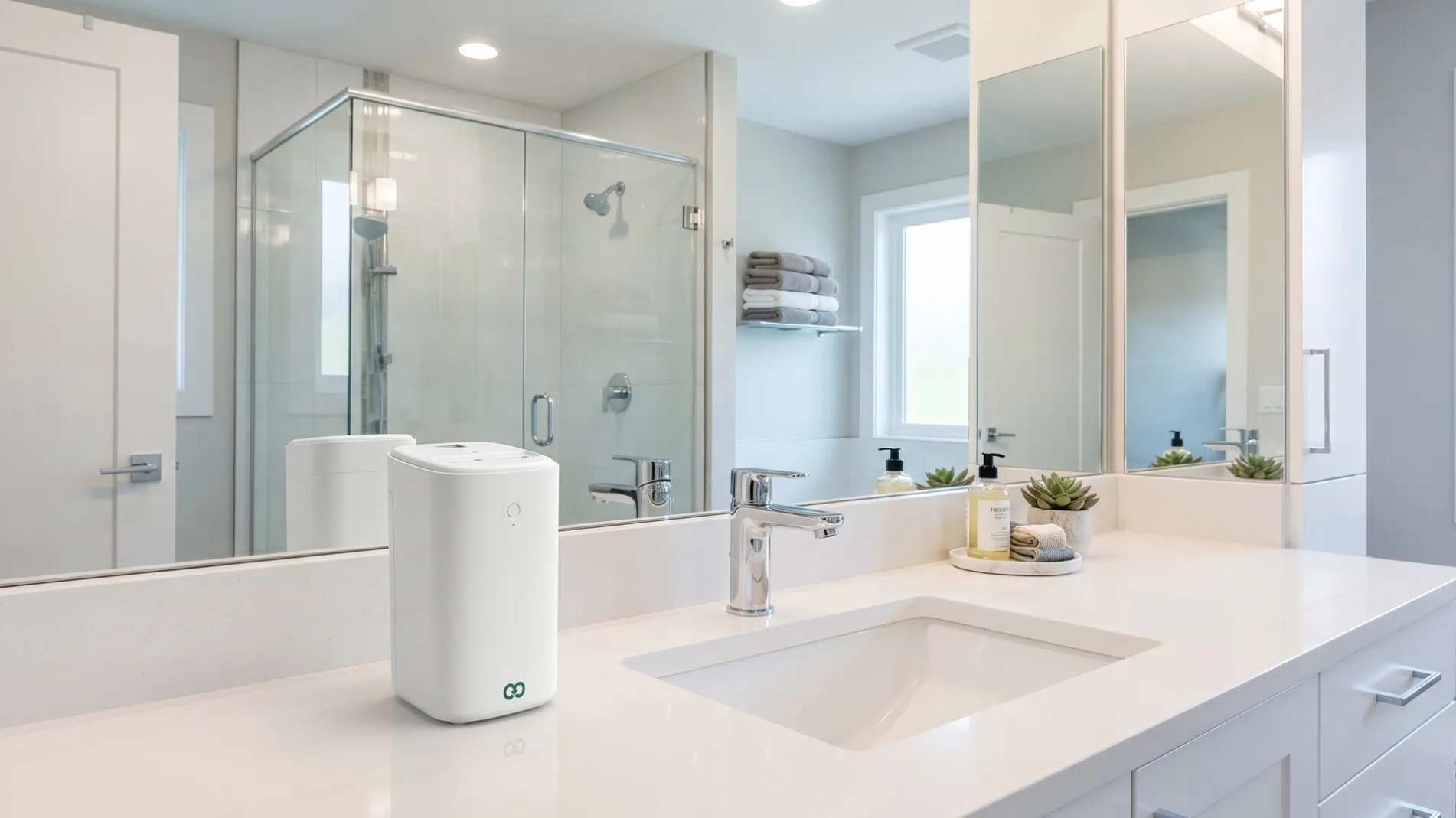
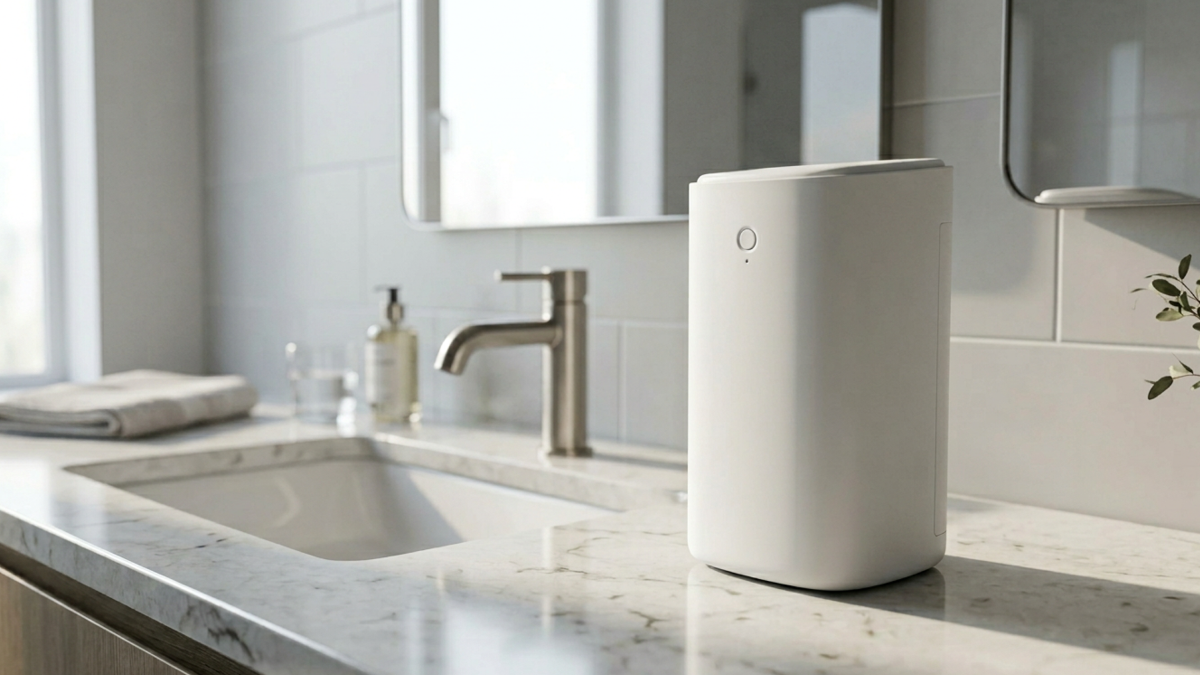
That's the foundation of LensLoop — Order + Recovery. The recovery unit lives on the bathroom counter, next to the sink, at the moment the waste is created. The app tracks recovery, manages the next order, and earns rewards. When it's time to return, LensLoop handles the logistics.
The lens removal routine already exists. It happens every night. We didn't build something new to put next to it. We built something that fits inside it.
What the Data Says
We didn't theorize about whether this would work. We ran it.
Over 18 months, we put the LensLoop system into real bathrooms and measured what actually happened. Not in a lab. In people's daily routines, with real daily disposable wearers.
That's not a participation rate. That's a capture rate — the share of waste each user actually recovered, measured against what they generated. 93% is close to what you'd get if the system were mandatory. It isn't. It's just easier than throwing things away.
That's what happens when recovery is at the point of use. Users aren't deciding to participate every day. They're just doing what they already do. The unit captures the waste that flows through the routine that was always happening.
PlanetCare figured out the same thing for a washing machine. Put the capture point inside the moment the waste is generated, handle the rest of the loop, and people will use it.
"A 93% capture rate isn't the result of unusually motivated users. It's the result of putting the recovery unit exactly where the waste is created."
We've Proven It Works. Now We're Expanding.
The beta is done. The capture rate is real. We're not a concept anymore.
What we need now is scale. More users means more data, more logistics efficiency, and a clearer picture of what a national contact lens recovery system actually looks like when it works. The 14 billion lenses discarded in the US every year aren't going anywhere. We've shown the model that captures them. Now we need the users to prove it scales.
We've proven the capture rate. Now we need the scale.
14 billion lenses get thrown away every year in the US. We've shown that 93% of them don't have to be — if the recovery system is in the right place at the right time. What we need now is more people in the system to prove it holds.
If you wear contact lenses, this is the simplest thing you can do. Join the waitlist. When we're ready to ship, you'll be first.
No commitment. You'll be the first to know when we open.
Frequently Asked Questions
What makes PlanetCare's approach to microfiber pollution different from other solutions?
Most microfiber solutions ask users to change their laundry behavior — buying different fabrics, hand-washing, or using laundry bags that require loading separately for each wash. PlanetCare's filter attaches directly to the washing machine drain hose and works automatically with every load. The user continues doing laundry exactly as they always have. That's why the product has scaled to over 10,000 active users when most awareness-based approaches don't.
How does LensLoop achieve a 93% capture rate when contact lens recycling programs recover less than 1% of waste?
Existing programs require users to collect waste, store it, remember it, and travel to a drop-off site. Each of those steps is a point where participation falls apart. LensLoop places the recovery unit in the bathroom, at the exact moment waste is generated during lens removal. No storage, no trip, no separate decision. The unit captures waste as part of a routine the wearer was already doing. That's why the capture rate is close to what you'd see if recovery were mandatory.
What is routine integration, and why does it matter for sustainability products?
Routine integration means designing a recovery or collection system to sit inside a behavior the user already performs, rather than alongside it as an additional step. It matters because most sustainability behavior depends on sustained motivation, which people reliably struggle to maintain. When a product is embedded in an existing routine — laundry, lens removal, whatever it may be — the user's motivation doesn't have to hold up every day. The system captures waste by default, not by willpower.
What is Point-of-Use Recovery, and how does LensLoop use it?
Point-of-Use Recovery places collection infrastructure at the exact location and moment waste is generated, eliminating the gap between waste creation and waste capture. For contact lenses, that moment is lens removal at the bathroom sink. LensLoop's countertop unit sits there, so waste goes directly in during a routine the wearer already has every day. The recovery happens inside the existing behavior, not as a separate action.
How does the LensLoop system work?
LensLoop works in three steps. Lenses arrive by subscription, with the recovery unit included. The countertop unit lives in the bathroom; waste goes in at the point of use with no sorting or storage required. The companion app tracks recovery rate, earns Blister Bucks rewards, and manages the next order. LensLoop handles all return logistics. The user's only job is using the unit. That's it.
Sources & References
- PlanetCare (2025). PlanetCare 2.0 product specifications and user data. planetcare.org
- Polytechnic University of Turin (2025, August). Comparative performance of washing machine microfiber filters. Journal of Hazardous Materials. [Independent lab study comparing PlanetCare, AEG, and Lint LUV-R filters.]
- Fogg, B. J. (2019). Tiny Habits. Houghton Mifflin Harcourt. [Fogg Behavior Model: motivation, ability, prompt.]
- TerraCycle / Bausch + Lomb (2026, April). ONE by ONE Recycling Program recovery reporting. [725,000 lbs / 119M units recovered to date.]
- Eyes on Eyecare (2025). 2025 Contact Lens Industry Report. [40.9M US wearers; 14B annual discards.] eyesoneyecare.com
- LensLoop (2026). Beta program results: 18-month point-of-use recovery pilot. Internal data. [93% capture rate; 2,316 units recovered.]