
Key Takeaways
"EyeRecycle placed recycling bins in 11 ophthalmology clinics and patients used them. The demand to recycle was never the problem. The problem is that patients visit a clinic once or twice a year and generate contact lens waste every single day."
"Clinic-based collection has five friction points before a patient reaches the bin: learn the program exists, start collecting at home, store waste for weeks or months, remember to bring it on appointment day, and actually hand it in. Every step is a dropout point."
"730 blister packs per year, per daily disposable wearer. All generated in the bathroom. That's where recovery has to happen too — not at a clinic down the road, not at a drop-off bin across town. LensLoop's 18-month beta put it there and achieved a 93% capture rate."
Medical Students Built a Recycling Program. It Worked. It Also Revealed the Real Problem.
In 2024, a group of medical students read about contact lens waste, got frustrated, and decided to do something about it.
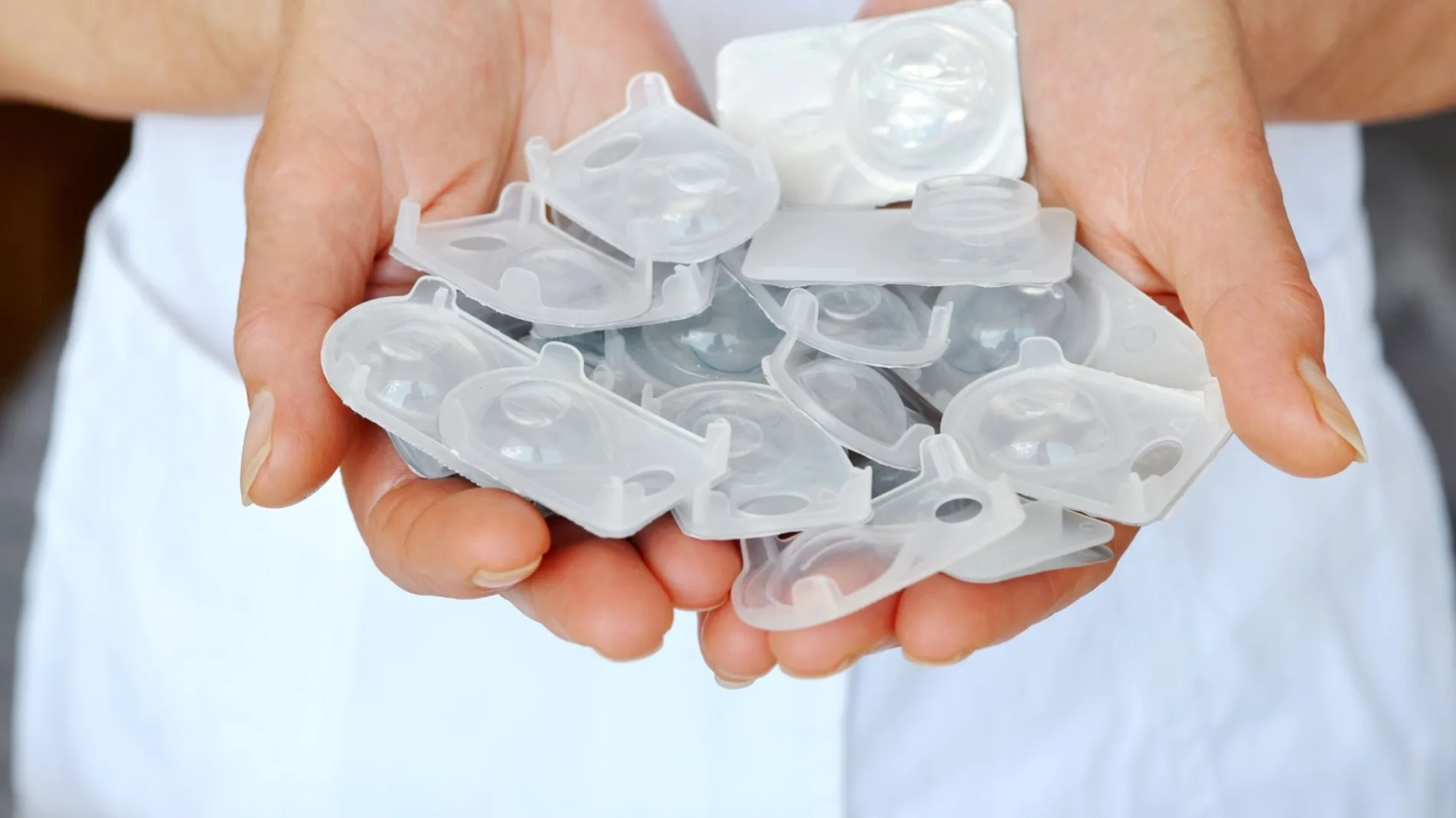
They set up recycling collection bins in ophthalmology clinics at 11 institutions across the country, from George Washington University to Northwestern to Mt. Sinai. The program was called EyeRecycle. Working with TerraCycle, they placed labeled collection boxes in waiting rooms and exam rooms, briefed faculty, hung flyers, and asked patients to bring in their used lenses and blister packs. By October, one site alone had collected 4.1 pounds of contact lens waste, while another had gathered 80 blister packs in just a few months.
Departments were enthusiastic, patients showed up, and it worked.
But the study authors were also honest about what didn't work, and that honesty is exactly what makes this research worth reading carefully.
The demand is real. That's been settled.
Here's the framing you usually see: contact lens wearers don't recycle because they don't care.
EyeRecycle joins a growing pile of evidence that this is wrong. When you put a recycling bin in front of contact lens wearers and make it easy to use, they use it. The challenge was never motivation. It was access.
Those 14 billion lenses come from 40.9 million US adults. Most of them, when asked, say they'd like to recycle. The gap between wanting to and actually doing it isn't a values gap. It's a logistics gap.
EyeRecycle narrowed that gap at 11 clinics. That's real progress. So why isn't clinic-based collection the answer?
The problem the study quietly named
The EyeRecycle authors listed the obstacles they ran into. The most important one was buried in the middle of the discussion section.
Read that again. Not "some patients missed the bin." Patients literally couldn't participate because their next ophthalmology appointment wasn't within the study window.
That's not a fixable bug. It's structural. Patients don't visit ophthalmology clinics weekly. They visit once a year, maybe twice. But they generate contact lens waste every single day.
"Patients who wear daily disposable contact lenses generate waste 365 days a year. They visit an ophthalmology clinic once or twice. A clinic-based recycling program can only reach them on those one or two days."
The study also flagged a second structural problem: patients have to remember to collect their waste at home, store it, and bring it to their appointment. That's three separate friction points before they even see the bin. If their life gets in the way on appointment day (which it often does), the waste goes in the trash.
The researchers named this clearly. They're not wrong about the enthusiasm the program generated; the gap between wanting to recycle and actually doing it is structural, not motivational. The question is what you do with that finding.
What patients have to do to recycle at a clinic
Consider everything a patient has to do before they reach that clinic bin:
Every one of those steps is a dropout point, and that's before accounting for patients who never make it to their appointment because they stopped going to the eye doctor at all.
The EyeRecycle bin was the easiest part of the whole system. Everything upstream of it was the problem.
Where waste actually lives
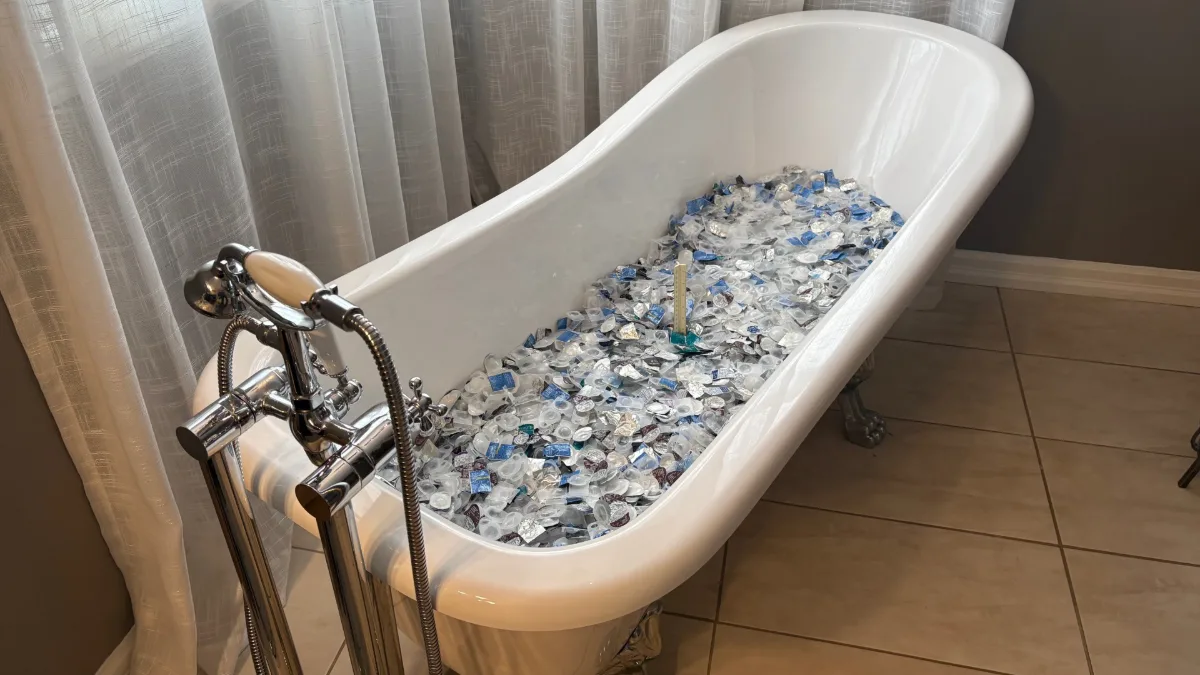
7,244 blister packs, physically collected and counted. One year of waste from 10 daily disposable lens wearers. (LensLoop internal, 2026)
If you wear daily disposables, the math works out to 730 plastic blister trays and 730 foil seals per year, about a kilogram of packaging waste, just from you.
Every one of those packs is created in the bathroom, when the lens comes out, not at the clinic or the pharmacy.
That's where the recovery has to happen too. Because if you ask people to bridge the distance between where waste is created and where they can drop it off, almost none of them will do it consistently enough to matter at scale.
EyeRecycle demonstrated something real: when you put recovery infrastructure where patients already are, participation goes up. The logical extension of that insight is to put it where the waste actually is, which is the bathroom.
Why LensLoop is built around this
Before founding LensLoop, our team ran Sightly, a platform that gave eye care practices their own online storefronts so patients could order lenses directly through their doctor instead of through a mass-market retailer. We had over 10,000 patients ordering through it. Through that work, we learned two things that changed how we thought about contact lens waste.
First: the garbage can wins because it's always there. Any recovery system that requires more effort than throwing something away will lose to the garbage can, not because people don't care, but because the garbage can is frictionless and the recovery system isn't.
Second: through Sightly, we knew when every patient's next order was about to ship. If you know when someone runs out of lenses, you know exactly when they've generated a full cycle's worth of waste. You know when to collect it.
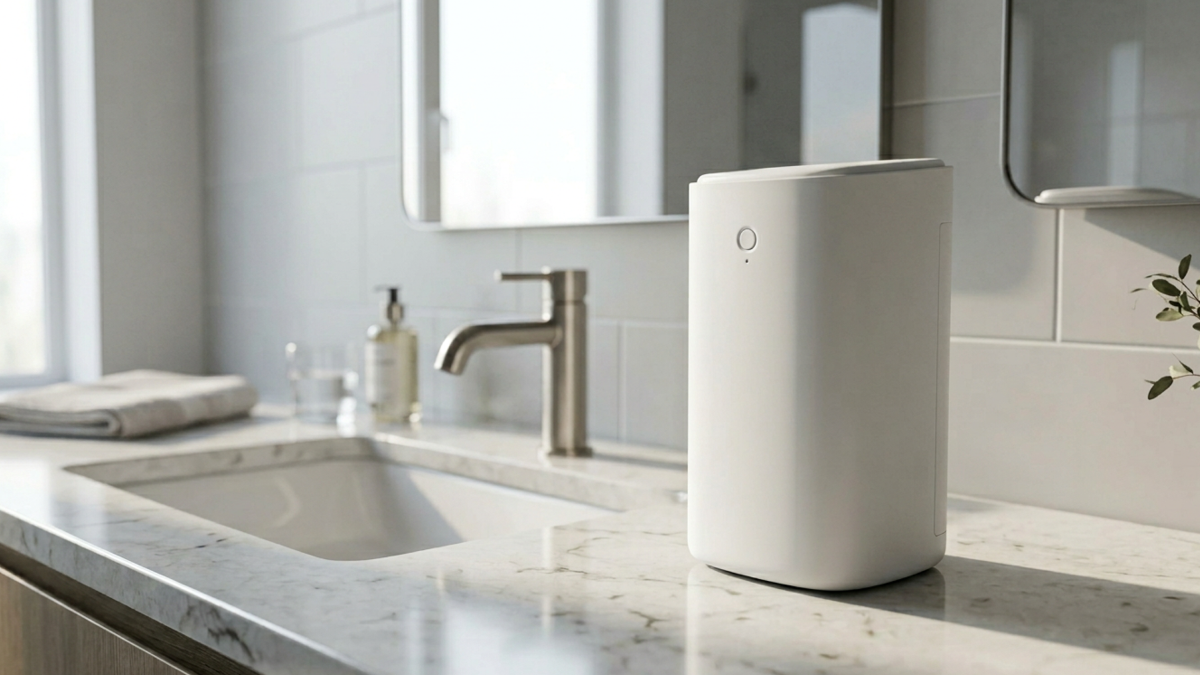
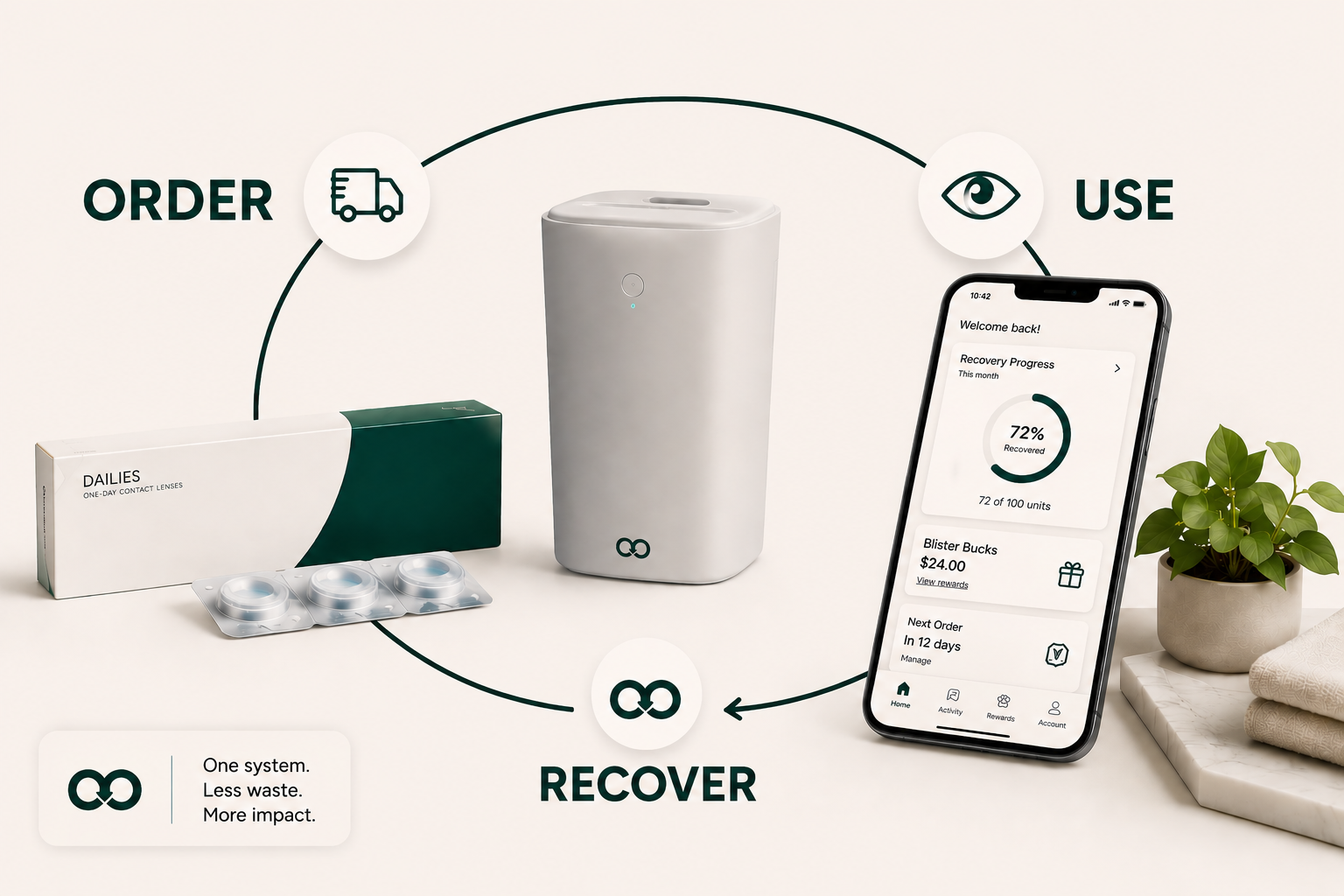
That's the logic behind LensLoop. Recovery has to happen in the bathroom, where the waste is created. Collection timing has to align with the supply cycle, so waste is picked up when lenses arrive.
The model is three steps:
We didn't just theorize about this. Over 18 months, we put the LensLoop system into real bathrooms and measured what happened, not in a lab or a survey, but in people's daily routines.
That 7% non-capture is worth explaining. It's real. It's the honest ceiling of any bathroom-based system: days you're traveling, staying elsewhere, or just out of routine. We're not hiding it. But a bathroom-based system at 93% capture is still higher than anything a drop-off program has ever achieved at scale.
"The gap isn't motivation. It's distance. Put recovery where waste is created, align it with the moment new supply arrives, and capture rates approach what you'd expect from a well-designed default."
These models aren't competing. They're complementary.
EyeRecycle is worth supporting. It's capturing waste that would otherwise go to landfill, training the next generation of ophthalmologists to think about sustainability, and building the case, study by study, that contact lens recycling has a real constituency.
But it's reaching a subset of a subset: patients who happen to visit a participating clinic, during the collection window, who remember to bring their waste. That's a thin slice of 40.9 million US lens wearers.
| Factor | Clinic drop-off (EyeRecycle model) | Home recovery (LensLoop model) |
|---|---|---|
| Where waste is captured | At the clinic, on appointment day | In the bathroom, at the moment of use |
| Frequency of touchpoint | 1–2x per year | Every day |
| Patient storage required | Yes. Weeks to months of storage at home. | No. The unit holds waste on the counter. |
| Recall / behavior change required | High. Must remember to collect and bring. | Minimal. Waste goes in the unit immediately. |
| Scales with wearer volume | Partially. Limited to clinic traffic. | Yes. Any subscriber, any location. |
| Capture rate data | Preliminary (pilot phase) | 93% over 18 months (beta, n=2,316 units) |
Clinic drop-offs are valuable at the margin, but home recovery is what changes the math at scale. To make a real dent in 14 billion lenses discarded annually, recovery has to go where lens wearers are, not wait for lens wearers to come to it.
We've proven the capture rate. Now we need the scale.
14 billion lenses get thrown away every year in the US. We've shown that 93% of them don't have to be — if the recovery system is in the right place at the right time. What we need now is more people in the system to prove it holds.
If you wear contact lenses, this is the simplest thing you can do. Join the waitlist. When we're ready to ship, you'll be first.
No commitment. You'll be the first to know when we open.
Frequently Asked Questions
Can I recycle contact lenses at my eye doctor's office?
Some ophthalmology clinics participate in drop-off programs like EyeRecycle or the Bausch + Lomb ONE by ONE program. You'd need to store your used lenses and blister packs at home, then bring them to your appointment. Check with your clinic to see if they participate.
Why can't contact lenses go in regular recycling?
Contact lenses are made from hydrophilic polymers (hydrogel and silicone-hydrogel) that standard municipal recycling facilities can't process. They need specialized handling to separate and recycle the materials properly.
How much contact lens waste does one person generate per year?
If you wear daily disposables, you're generating roughly 730 plastic blister packs and 730 foil seals per year: about a kilogram of packaging waste, all of it non-biodegradable. Bi-weekly and monthly lens wearers generate significantly less packaging, but the lenses themselves still require specialized recycling.
What is point-of-use contact lens recovery?
Point-of-use recovery means capturing waste at the moment and location it's created (in the bathroom, when the lens comes out) rather than asking users to store and transport waste to a separate collection point. LensLoop is built on this principle: a countertop unit captures waste immediately, aligned with subscription delivery so return logistics happen automatically.
How does LensLoop's capture rate compare to drop-off programs?
LensLoop's 18-month beta achieved a 93% per-user capture rate across 2,380 units physically recovered (to-date). Existing drop-off programs recover well under 1% of the 14 billion lenses discarded annually in the US. The difference comes down to where recovery happens (bathroom vs. clinic) and how often users interact with the system.
Sources & References
- CDC (2024). About Contact Lenses. US Centers for Disease Control and Prevention. [45 million US contact lens wearers.] cdc.gov
- Rolsky, C., Kelkar, V. P., & Halden, R. U. (2020). Nationwide Mass Inventory and Degradation Assessment of Plastic Contact Lenses in US Wastewater. Environmental Science & Technology. [21% of users flush lenses; microplastic contamination of waterways.] doi.org
- MyVision.org (2022). Contact Lenses & The Environment. [93.4% of contact lens users do not recycle their lenses.] myvision.org
- Eyes on Eyecare (2025). 2025 Contact Lens Industry Report. [14 billion individual lenses discarded annually in the US; 40.9 million wearers.] eyesoneyecare.com
- Chen, et al. (2024). EyeRecycle: Sustainable Recycling Initiatives in Ophthalmology Clinics. AAO YO Green Grant pilot program report. [11 active US collection sites; 4.1 lbs collected at George Washington University by October 2024.]
- Stephen, S., d'Souza, H., Divekar, O., & Kanegaonkar, R. (2024). A Survey of Medical Students' Attitudes Towards Sustainable Healthcare. British Journal of Surgery. doi.org
- Contact Lens Spectrum / PentaVision (2019). The Environmental Impact of Contact Lens Waste. [Contact lens plastics are not biodegradable or compostable; standard recycling facilities cannot process them.] clspectrum.com
- LensLoop (2026). Beta program results: 18-month point-of-use recovery pilot. Internal data. [93% capture rate; 2,316 units physically recovered.]